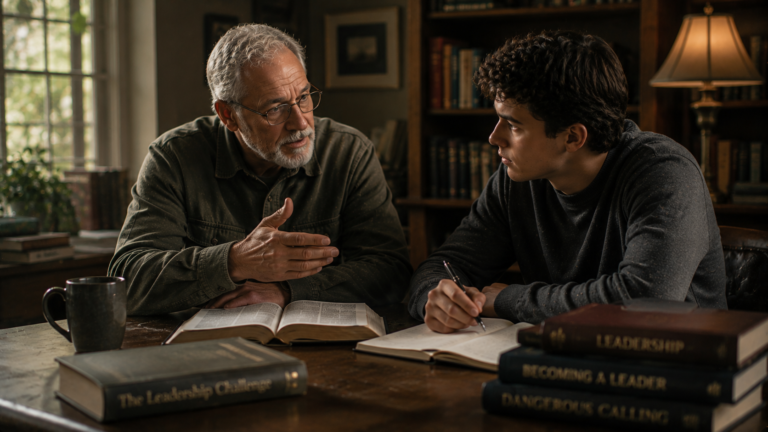
Can Leadership Exist Without Character?

Introduction
A person can hold a leadership position without having strong character.
They can be intelligent.
Persuasive.
Organized.
Strategic.
Visionary.
Confident.
They can build teams.
Attract followers.
Make decisions quickly.
Communicate powerfully.
Produce measurable results.
And still lack integrity.
Humility.
Self-control.
Truthfulness.
Compassion.
Faithfulness.
This is one of leadership’s most dangerous realities.
Leadership can exist without character for a while.
But it cannot remain healthy without it.
Position may give authority.
Skill may produce results.
Charisma may create momentum.
But character determines how power is used when pressure rises, when temptation appears, when criticism comes, when no one is watching, and when the leader has enough influence to avoid consequences for a time.
Jesus asked:
“For what is a man profited, if he shall gain the whole world, and lose his own soul?”
— Matthew 16:26, KJV
The question reaches directly into leadership.
What does it profit a leader to build something impressive while becoming internally hollow?
What does it profit a ministry to grow while its leader’s integrity erodes?
What does it profit an organization to succeed publicly while trust is quietly dying inside?
Leadership without character may still look successful.
That is precisely what makes it dangerous.
Character Determines What Leadership Becomes
Leadership amplifies.
Whatever already exists within a leader gains greater reach.
Humility can become service.
Wisdom can protect others.
Courage can strengthen a community.
Integrity can build trust.
But insecurity can become control.
Pride can become domination.
Fear can become manipulation.
Greed can become exploitation.
Anger can become intimidation.
Leadership does not automatically create these qualities.
It gives them room.
Jesus said:
“A good man out of the good treasure of the heart bringeth forth good things…”
— Matthew 12:35, KJV
Leadership flows from the inner life.
This is why technique alone is never enough.
A leader can learn communication skills without learning truthfulness.
Conflict-management techniques without humility.
Delegation without trust.
Strategic planning without wisdom.
Influence without integrity.
Skill answers:
“Can I do this effectively?”
Character asks:
“Who am I becoming while I do it?”
Character Matters Most When Power Increases
Most people can appear humble when they have little power.
Leadership tests humility differently.
People begin listening.
Schedules adjust around the leader.
Access increases.
Others may hesitate to challenge them.
The leader can begin experiencing treatment that subtly communicates:
You are important.
That is where character becomes essential.
Deuteronomy warned Israel about the danger of success:
“Then thine heart be lifted up, and thou forget the Lord thy God…”
— Deuteronomy 8:14, KJV
The danger came after blessing.
Abundance.
Success.
Increase.
Power creates opportunity not only to accomplish good but also to reveal what the leader truly worships.
A leader without character begins using power increasingly for self.
A leader with growing Christlike character asks:
“How can this authority serve what God has entrusted to me?”
Saul Had Position Without Sustained Character
King Saul provides one of Scripture’s clearest warnings.
He possessed legitimate authority.
He had been appointed king.
He had military power.
Public visibility.
Resources.
A nation under his leadership.
But over time, his inner weaknesses increasingly controlled his decisions.
Fear of people.
Jealousy.
Insecurity.
Disobedience.
Concern for image.
When Samuel confronted him after his disobedience, Saul admitted:
“I feared the people, and obeyed their voice.”
— 1 Samuel 15:24, KJV
Later, David’s success became intolerable to him.
Instead of developing the younger man, Saul perceived him primarily as a threat.
The throne remained.
Character deteriorated.
This is the danger.
A title can remain after the inner qualifications for trustworthy leadership have begun collapsing.
Leadership Skill Can Hide Character Failure
Some leaders are so capable that their competence delays exposure.
They communicate well enough to explain problems away.
They produce results strong enough that people overlook warning signs.
They possess enough influence to silence criticism.
They are indispensable enough that organizations become afraid to confront them.
Their giftedness protects their weakness.
For a while.
This makes character failure especially dangerous among highly capable leaders.
Proverbs says:
“Pride goeth before destruction, and an haughty spirit before a fall.”
— Proverbs 16:18, KJV
The fall may not happen immediately.
That delay can produce false confidence.
Nothing happened.
The decision worked.
People still respect me.
The organization is growing.
But immediate success is not proof that a decision was righteous.
Results can conceal rot.
Character Is Revealed by What a Leader Does With Truth
Leadership creates opportunities to distort reality.
A poor decision is made.
Does the leader admit it?
A prediction fails.
Does the leader revise?
Someone raises a valid concern.
Does the leader listen?
A mistake becomes embarrassing.
Does the leader tell the truth or protect image?
Character determines whether truth remains more important than reputation.
Proverbs says:
“He that covereth his sins shall not prosper: but whoso confesseth and forsaketh them shall have mercy.”
— Proverbs 28:13, KJV
A leader of character can say:
“I was wrong.”
“I misunderstood.”
“I need to apologize.”
“This decision needs to be corrected.”
Those sentences may feel costly.
They are also powerful.
They communicate that truth is above the leader.
That is essential for healthy authority.
Character Determines How a Leader Treats the Weak
One of the clearest tests of leadership character is how the leader treats people who cannot benefit them.
People with little influence.
Junior staff.
Children.
The poor.
Volunteers.
Those who disagree.
Those whose mistakes create inconvenience.
Those with no platform.
Jesus repeatedly gave attention to people others ignored.
When the disciples attempted to prevent children from coming to Him:
“But Jesus said, Suffer little children, and forbid them not, to come unto me…”
— Matthew 19:14, KJV
Power without character often looks upward.
Who can help me?
Who matters strategically?
Who has influence?
Christlike character also looks downward and outward.
Who is vulnerable?
Who is unseen?
Who needs protection?
Who cannot repay me?
A leader’s treatment of powerless people may reveal more about character than any public speech.
Character Determines How a Leader Responds to Opposition
Criticism reveals.
So does disagreement.
When people challenge a leader, what happens?
Does the leader listen?
Become defensive?
Retaliate?
Humiliate?
Remove access?
Label disagreement as disloyalty?
Moses faced extraordinary criticism.
At times he responded well.
At other times pressure exposed weakness.
Numbers 20 records one of those painful moments.
After years of leading a complaining people, Moses acted in anger at Meribah.
Even mature leaders are vulnerable when pressure accumulates.
This is why character must continue growing.
Past faithfulness does not make present reactions automatically wise.
Leadership requires learning to remain governed under pressure.
Character Determines Whether Authority Serves or Controls
Authority can create order.
But control can become addictive.
A leader begins wanting to approve everything.
Know everything.
Decide everything.
Others stop thinking independently.
The organization becomes an extension of one person.
Jesus rejected this model.
He said:
“Ye know that the princes of the Gentiles exercise dominion over them… But it shall not be so among you…”
— Matthew 20:25–26, KJV
Then He connected greatness with service.
Character allows leaders to hold authority without needing to dominate.
Secure leaders can delegate.
Trust.
Develop.
Release.
Insecure leaders often centralize.
Because control makes insecurity feel safer.
Character Is What Remains When No One Is Watching
Public leadership creates performance pressure.
Leaders know people are watching.
But the deepest character questions are often private.
What does the leader watch?
What do they hide?
How do they use money?
How do they speak about people privately?
What boundaries exist?
What happens when no one can verify the story?
Joseph faced temptation in private.
His response was:
“…how then can I do this great wickedness, and sin against God?”
— Genesis 39:9, KJV
His integrity did not depend upon human observation.
He understood himself as accountable to God.
This is one of the strongest protections for leadership character.
Not merely:
“Could this become public?”
But:
“Is this faithful before God?”
Character Determines Whether Success Produces Gratitude or Pride
Success reveals almost as much as failure.
When things go well, does the leader become grateful?
Or superior?
Does success produce worship?
Or entitlement?
Nebuchadnezzar looked over Babylon and said:
“Is not this great Babylon, that I have built… by the might of my power, and for the honour of my majesty?”
— Daniel 4:30, KJV
His language reveals the danger.
My achievement.
My power.
My glory.
Leadership character remembers that ability, opportunity, health, timing, relationships, and influence are all gifts.
Paul asks:
“And what hast thou that thou didst not receive?”
— 1 Corinthians 4:7, KJV
That question dismantles pride.
Giftedness is received.
Opportunity is received.
Leadership itself is received.
Character turns success into stewardship rather than self-exaltation.
Character Determines Whether Failure Produces Growth
Every leader makes mistakes.
Character determines what happens next.
A weak-character leader hides.
Blames.
Rewrites history.
Finds someone else responsible.
A mature leader asks:
What did I miss?
Who was affected?
What needs repair?
What must change?
David’s response when Nathan confronted him was:
“I have sinned against the Lord.”
— 2 Samuel 12:13, KJV
No excuse.
No public-relations strategy.
No attack on Nathan.
Repentance does not erase consequences.
But it keeps failure from hardening into deception.
Character Makes Accountability Possible
Leaders without character often resist accountability because accountability limits control.
But trustworthy leaders recognize its necessity.
Proverbs says:
“Where no counsel is, the people fall: but in the multitude of counsellors there is safety.”
— Proverbs 11:14, KJV
Healthy accountability asks uncomfortable questions.
How are you really doing?
What are you tempted by?
Where are you becoming defensive?
How are you treating your family?
How is your prayer life?
What decision are you avoiding?
Who can ask these questions?
A leader surrounded only by admirers is vulnerable.
Character welcomes people who love truth more than the leader’s comfort.
Character Is More Important Than Charisma
Charisma can draw people.
Character gives them reason to remain.
Charisma produces attention.
Character produces trust.
Charisma can create momentum quickly.
Character sustains credibility over time.
Scripture warns against evaluating people only by appearances.
When Samuel expected one of Jesse’s older sons to be God’s chosen king, God told him:
“…man looketh on the outward appearance, but the Lord looketh on the heart.”
— 1 Samuel 16:7, KJV
The world often rewards appearance.
God examines the heart.
Leadership culture easily reverses the order.
We notice eloquence.
Confidence.
Appearance.
Vision.
Performance.
But God asks deeper questions.
Integrity.
Obedience.
Humility.
Faithfulness.
Character Is More Important Than Results
Results matter.
Leadership should produce fruit.
Stewardship requires effectiveness.
But results alone cannot define faithfulness.
A leader may achieve impressive growth through manipulation.
Raise money through pressure.
Gain loyalty through fear.
Increase numbers while neglecting truth.
Jesus warned:
“For what shall it profit a man, if he shall gain the whole world, and lose his own soul?”
— Mark 8:36, KJV
The same principle applies organizationally.
What does it profit a ministry to grow if the methods contradict Christ?
What does it profit a leader to reach the goal while damaging everyone on the way?
Character places boundaries around effectiveness.
There are things a Christian leader must refuse to do even if they work.
Character Cannot Be Borrowed
A leader can borrow ideas.
Systems.
Strategies.
Language.
But not character.
A ministry may have an excellent reputation.
A leader may serve under respected mentors.
A title may carry credibility.
Eventually, personal character becomes visible.
The sons of Sceva in Acts 19 attempted to use spiritual authority they did not truly possess.
Borrowed language could not create reality.
Leadership character must become personal.
My integrity.
My walk with God.
My obedience.
My humility.
My private choices.
No institution can provide those on behalf of a leader.
Character Is Formed Before the Crisis
Leaders sometimes imagine they will make the right decision when a major test comes.
But the crisis often reveals habits already formed.
Daniel refused compromise because conviction had been established.
“But Daniel purposed in his heart that he would not defile himself…”
— Daniel 1:8, KJV
He decided before the greatest pressure.
Character is built in small choices.
Do I exaggerate?
Do I keep commitments?
Do I take credit unfairly?
Do I respect confidentiality?
Do I admit errors?
Do I manipulate people subtly?
Small faithfulness prepares for larger faithfulness.
Character Requires Self-Control
Leaders experience strong emotions.
Frustration.
Anger.
Fear.
Disappointment.
Ambition.
Attraction.
Jealousy.
Exhaustion.
Without self-control, leadership becomes dangerous.
Proverbs says:
“He that hath no rule over his own spirit is like a city that is broken down, and without walls.”
— Proverbs 25:28, KJV
A leader may understand exactly what should happen and still react destructively.
Self-control creates space between emotion and action.
Wait.
Pray.
Listen.
Ask.
Consider.
Then respond.
That pause can protect entire organizations.
Character Requires Humility
Humility does not mean denying competence.
Jesus knew who He was.
Yet He washed feet.
Paul was deeply gifted.
Yet he said:
“But by the grace of God I am what I am…”
— 1 Corinthians 15:10, KJV
Humility tells the truth.
I have strengths.
They are gifts.
I have weaknesses.
I need grace.
I can lead.
I can also be wrong.
This balance protects leadership.
Pride exaggerates self.
Insecurity diminishes self.
Humility sees self under God.
Character Requires Courage
Sometimes character becomes costly.
A leader discovers wrongdoing in the organization.
Will they address it?
A powerful person demands compromise.
Will the leader refuse?
A popular decision is unwise.
Will the leader say no?
Daniel’s companions told Nebuchadnezzar:
“…we will not serve thy gods, nor worship the golden image…”
— Daniel 3:18, KJV
That is character under pressure.
Leadership without courage eventually becomes captivity to approval.
Character Requires Love
A leader can be disciplined, honest, courageous, and still become harsh.
Christian character must be shaped by love.
Paul says:
“And though I have the gift of prophecy, and understand all mysteries, and all knowledge… and have not charity, I am nothing.”
— 1 Corinthians 13:2, KJV
Strong words.
Giftedness without love is spiritually empty.
Leadership character is not merely moral toughness.
It is Christlike love governed by truth.
Jesus Shows Character and Leadership Fully United
In Jesus, there was no gap between public leadership and private character.
He taught truth and lived truth.
Served and called others to serve.
Loved and called others to love.
Obeyed the Father and taught obedience.
Used authority without selfishness.
Held power without corruption.
Peter later wrote:
“Who did no sin, neither was guile found in his mouth.”
— 1 Peter 2:22, KJV
Jesus is not simply one leadership example among many.
He is the standard.
Christian leadership asks not merely:
“What technique did Jesus use?”
but:
“What kind of person was Jesus, and how is His character forming mine?”
Character Formation Begins With Abiding
Character cannot be sustained by willpower alone.
Jesus said:
“Abide in me, and I in you…”
— John 15:4, KJV
Then:
“…without me ye can do nothing.”
— John 15:5, KJV
Christian leaders often spend enormous energy developing leadership capacity.
More training.
More strategy.
More systems.
But character grows through communion with Christ.
Scripture.
Prayer.
Repentance.
Obedience.
Surrender.
The Holy Spirit.
Paul describes the fruit:
“But the fruit of the Spirit is love, joy, peace, longsuffering, gentleness, goodness, faith, Meekness, temperance…”
— Galatians 5:22–23, KJV
These are leadership qualities too.
But they are first spiritual fruit.
Leadership Reflection
Take your leadership role away in your imagination.
Remove the title.
The platform.
The authority.
The recognition.
What remains?
That person is carrying the leadership.
Now consider four questions.
Character under pressure: Who do you become when tired, criticized, ignored, or threatened?
Character in private: Are there parts of your life that would significantly damage trust if exposed?
Character with power: Do people with less authority experience you as safe, fair, and truthful?
Character after failure: Do you become defensive, or can you repent and repair?
Choose one area where leadership skill may currently be stronger than character formation.
Do not hide it behind greater productivity.
Bring it before Christ.
Seek accountability.
Build a concrete boundary.
Repair what needs repair.
Character grows when truth is faced early.
Reflection
Which matters more in the way you evaluate leaders—results or character?
Have you ever excused poor character because someone was highly gifted?
How do you respond when your authority is questioned?
Who can correct you?
What happens to your character when you are under pressure?
Are your public and private lives becoming increasingly aligned?
Where are you most tempted to protect reputation instead of truth?
Do the people with the least power around you experience your leadership as Christlike?
And is your leadership capacity currently growing faster than your inner life?
Conclusion
Can leadership exist without character?
Yes.
For a while.
A title can remain.
A platform can grow.
Results can continue.
People can still follow.
But leadership without character becomes increasingly unstable.
Because character determines what happens when power increases.
When temptation appears.
When criticism comes.
When success produces pride.
When failure demands humility.
When no one is watching.
When the leader could manipulate and probably get away with it.
Character determines whether authority becomes service or control.
Whether success becomes stewardship or self-glory.
Whether correction produces growth or retaliation.
Whether influence strengthens others or makes them dependent.
Christian leadership therefore cannot treat character as an optional personal-development topic.
Character is foundational.
And character cannot be manufactured merely through technique.
It must be formed in relationship with Christ.
Jesus said:
“Abide in me…”
— John 15:4, KJV
That is where Christian leadership begins.
Before strategy.
Before influence.
Before visibility.
Before scale.
The leader must remain a disciple.
Because eventually leadership will expose what lies within.
And when that happens, skill will not be enough.
Charisma will not be enough.
Experience will not be enough.
Position will not be enough.
What will matter is whether the person carrying the authority has been increasingly formed by truth, humility, integrity, self-control, courage, love, and dependence upon Christ.
Leadership can exist without character.
But faithful leadership cannot.
Continue Growing
→