Can Teaching Change a Generation?

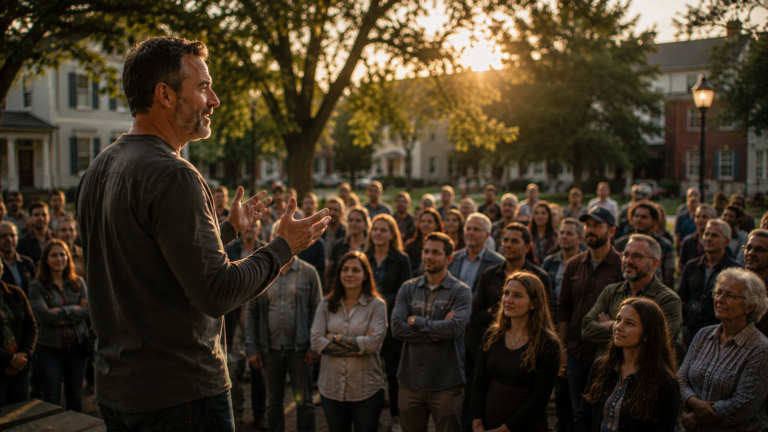
Every day, teachers step into classrooms not knowing the full weight of what is at stake. The lessons they teach, the way they respond to questions, the character they model—these are not just shaping students for a test or a semester. They are quietly forming the people who will one day shape families, workplaces, churches, and communities. The question presses in: Can teaching actually change a generation?
Formation Is Always Happening—But Who Is Doing the Forming?
No generation grows up untouched. Young people are constantly being shaped—by families, friends, schools, media, technology, advertising, culture, and religious communities. The real question is not whether formation is happening, but who and what are doing the forming. Education is never neutral. In every classroom, students are developing habits of attention, judgment, responsibility, and behavior. They are absorbing ideas about truth, authority, human worth, failure, and purpose—sometimes explicitly, often through the culture and example set by adults.
Scripture recognizes this generational dynamic. The psalmist writes, “One generation shall praise thy works to another, and shall declare thy mighty acts” (Psalm 145:4, KJV). Truth, wisdom, character, and faith can travel across generations—but so can error. Every generation receives something from those before and passes something to those who follow. Teachers stand at a crucial point in that transmission.
Scripture’s Vision: Teaching That Outlives the Teacher
God’s people were always called to intentional generational teaching. After giving Israel His commandments, Moses instructed, “And thou shalt teach them diligently unto thy children, and shalt talk of them when thou sittest in thine house, and when thou walkest by the way, and when thou liest down, and when thou risest up” (Deuteronomy 6:7, KJV). Psalm 78 echoes this: “We will not hide them from their children, shewing to the generation to come the praises of the Lord, and his strength, and his wonderful works that he hath done” (Psalm 78:4, KJV). The goal? “That the generation to come might know them… who should arise and declare them to their children” (Psalm 78:6, KJV).
Notice the movement: one generation teaches another, who then teaches the next. This is larger than any one classroom, but every educator participates in this generational reality. What is faithfully taught does not necessarily stop with the student. Students become adults, parents, leaders, and influencers. What is formed in them can shape people the original teacher may never meet.
But Scripture also warns of the cost when this chain breaks. After Joshua’s generation, “there arose another generation after them, which knew not the Lord, nor yet the works which he had done for Israel” (Judges 2:10, KJV). What a generation forgets can shape it as powerfully as what it remembers. Education is about both preservation and discovery—receiving inherited wisdom, examining it, preserving what is true, correcting what is false, and continuing to learn.
Ideas Become Actions—And Actions Shape the Future
Teaching changes generations because ideas have consequences. What students believe about truth, success, integrity, and human value will eventually shape their decisions and relationships. Jesus said, “A good tree cannot bring forth evil fruit, neither can a corrupt tree bring forth good fruit” (Matthew 7:18, KJV). Fruit reveals what has been growing. While only God can transform the heart at the deepest level, teaching continually plants seeds—ideas, habits, examples, standards—that influence what may eventually bear fruit in a life, a family, or a community.
Today’s students have access to more information than any previous generation. But information alone is not enough. Discernment is essential: How do we know what is true? Is the source trustworthy? What evidence supports the claim? Proverbs reminds us, “The simple believeth every word: but the prudent man looketh well to his going” (Proverbs 14:15, KJV). A generation that can access information but cannot evaluate it is vulnerable to manipulation. Educators serve society when they teach students not just to consume information, but to examine it wisely.
Character Multiplies—For Good or Ill
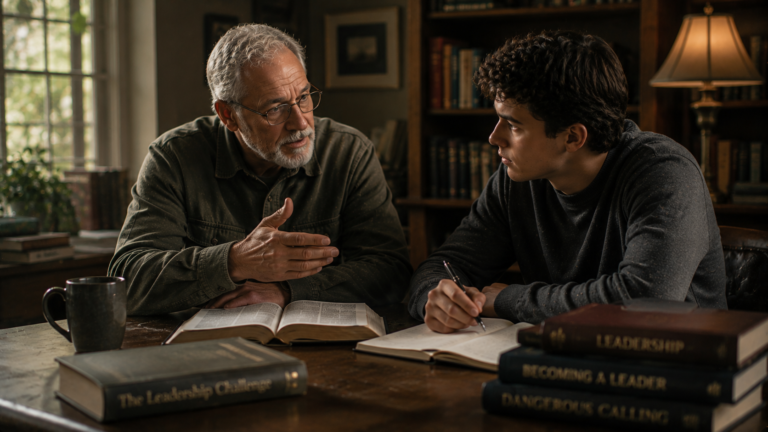
Imagine a teacher who consistently models integrity: promises are kept, mistakes are admitted, rules are applied fairly, people are treated with dignity, and truth matters even when inconvenient. Most students may never consciously say, “My teacher is forming my understanding of integrity,” but they are witnessing something that can multiply. Paul described this principle to Timothy: “And the things that thou hast heard of me among many witnesses, the same commit thou to faithful men, who shall be able to teach others also” (2 Timothy 2:2, KJV). Four layers of influence in one verse—this is generational multiplication. What is received faithfully becomes something that can be given faithfully.
Teachers cannot predict which students will become parents, leaders, caregivers, or quiet examples of faithfulness. But every student will influence others. Education multiplies through people. A teacher rarely changes an entire generation directly, but influences people who influence others. That is how generational change often happens—quietly, relationally, repeatedly.
Limits and Hope: Only Christ Transforms Generations
The possibility of influence must be balanced with humility. Teachers are not saviors. Education cannot redeem humanity or cure the deepest problem of the human heart. Scripture teaches that transformation ultimately comes through Christ: “Therefore if any man be in Christ, he is a new creature…” (2 Corinthians 5:17, KJV). Only Christ brings spiritual rebirth. Only the Holy Spirit transforms the heart. This truth does not diminish education; it puts it in its proper place. Teachers can teach truth, cultivate wisdom, model character, and encourage responsibility, but they cannot control what every student becomes. Faithful educators plant; God alone knows the entire story of the seed.
Jesus Himself began with a few and reached generations. He invested deeply in a small group of disciples, who then carried His teaching outward. Generations later, the message continues. Deep formation in a few people can eventually reach many. Teachers should not underestimate the significance of faithful investment simply because the classroom seems small.
Faithful Teaching in the Present, Fruit in the Future
The phrase “change a generation” can sound overwhelming. But generations are made of individuals. You do not teach “a generation” at 9:00 on Monday morning—you teach Maria, Samuel, Aisha, Daniel, Leo, Anna. Formation happens personally before its effects become generational. Jesus spoke to crowds, but He also stopped for individuals. Educators can embrace the same humility. You may not change an entire generation, but you can faithfully teach the people God has placed before you today. That is enough responsibility for one day.
Education rarely produces instant transformation. Seeds are planted before harvest appears. Roots develop where no one can see them. Teachers often work in the hidden stage. James uses the image of a farmer: “Behold, the husbandman waiteth for the precious fruit of the earth, and hath long patience for it…” (James 5:7, KJV). Patience is not passive; it is the steady work of tending, correcting, encouraging, modeling, praying, and trusting that faithful work has value even when results remain incomplete.
What Will Your Students Carry Forward?
Curriculum, technology, and educational theories change, but some things remain remarkably durable: integrity, compassion, courage, humility, responsibility, wisdom, self-control, justice, love. Paul wrote, “But the fruit of the Spirit is love, joy, peace, longsuffering, gentleness, goodness, faith, Meekness, temperance…” (Galatians 5:22–23, KJV). Imagine classrooms shaped increasingly by these qualities—not perfect, but marked by Christlike character. The influence could travel far beyond the school walls, because students eventually take the kind of people they are becoming everywhere they go.
If you want to think generationally without becoming overwhelmed, begin small. Ask yourself: What qualities does the world my students will inherit desperately need? Integrity? Discernment? Responsibility? Compassion? Courage? Perseverance? Respect for truth? Choose one and examine how your classroom cultivates it. Model what you hope students will reproduce. Pray for a longer vision—not just, “Did today’s lesson succeed?” but, “What kind of people are these repeated classroom experiences helping my students become?”
Teaching That Echoes Into Eternity
Can teaching change a generation? Yes—but not usually in dramatic, visible ways. Generations are shaped through countless acts of formation repeated across years. A teacher explains truth; a student learns to think. A teacher insists on honesty; a student develops integrity. A teacher models fairness; a student learns how authority can serve rather than dominate. Then students leave and carry what was formed into families, professions, churches, and communities. Some will teach others. What was planted begins to travel.
Christian educators have reason for both seriousness and hope. Seriousness, because influence matters. Hope, because they do not carry the work alone. Christ remains Lord over generations. The Holy Spirit can accomplish what human teaching cannot. God can take seeds faithfully planted and produce fruit far beyond the sight of the person who planted them.
So teach the student in front of you. Teach truthfully. Think carefully. Expect growth. Protect dignity. Model integrity. Encourage courage. Cultivate wisdom. Point toward Christ whenever your context faithfully allows. And do not despise the apparent smallness of today’s classroom. You may never teach an entire generation—but you teach people who will help shape one. God sees the harvest that is yet to come.