How Does Faith Shape Family Culture?

Every family answers the question, “What matters here?”—not with a plaque on the wall, but through the rhythms of daily life. The way conflicts are handled, what is celebrated, how time is spent, and the words spoken all quietly reveal a family’s true culture. For families who desire to follow Jesus, faith is not just a belief system; it becomes the atmosphere that shapes every relationship, decision, and habit at home.
Christ at the Center: The Foundation of Family Culture
Every home is built around something—success, comfort, achievement, security, or Christ. Jesus calls His followers to “seek first the kingdom of God and his righteousness” (Matthew 6:33). When Christ is at the center, family priorities are reordered. Decisions, celebrations, and even disappointments are filtered through the lens of living for Someone greater than ourselves. This shift is not theoretical; it is experienced in the way a family spends its time, resolves conflict, and extends grace. Over time, Christ-centeredness becomes the defining feature of the family’s culture, not just its aspiration.
Love and Grace: The Language of a Christ-Shaped Home
In a home shaped by faith, love is not merely spoken of—it is practiced. The love described in 1 Corinthians 13—patient, kind, humble, not easily angered—becomes the family’s common language. Mistakes and failures are inevitable, but the gospel shapes how families respond: with confession, forgiveness, and restoration. Because Christ has freely forgiven us, we learn to extend grace to one another. This creates a culture of safety, where pride gives way to humility and reconciliation is always possible. Children who experience this kind of love and grace at home begin to understand the heart of God Himself.
Scripture and Prayer: Guiding Everyday Life
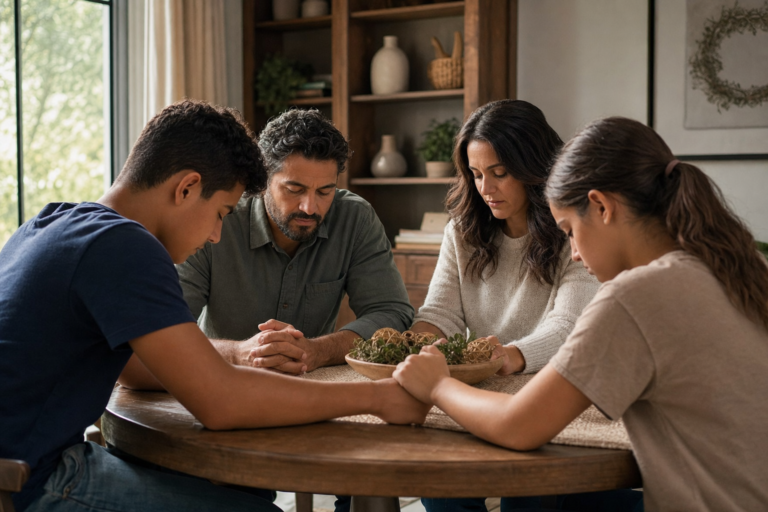
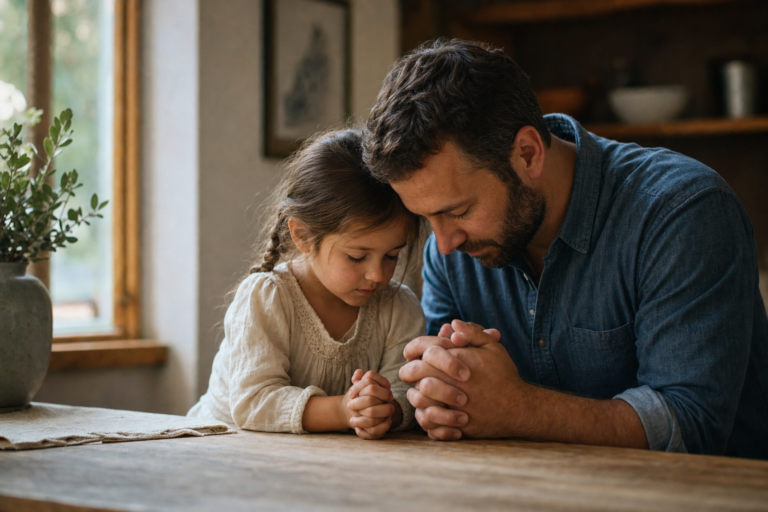
Faithful families do not reserve spiritual practices for Sundays. God’s Word becomes the guide for daily decisions—big and small. When questions or conflicts arise, the family asks, “What does God say?” Parents model a life submitted to Scripture, and children gradually learn its wisdom and trustworthiness. Prayer, too, becomes a natural response rather than a last resort. Whether facing uncertainty, illness, or gratitude for blessings, family members bring their concerns and thanks to God together. Dependence on God is normalized, and prayer becomes woven into the fabric of daily life.
Gratitude, Service, and Words That Build
Many homes are marked by dissatisfaction and complaint, but a Christ-centered family chooses gratitude. Paul’s instruction, “In every thing give thanks” (1 Thessalonians 5:18), shifts attention from what is lacking to God’s faithfulness. Thankfulness fills the home with joy and contentment. Service also becomes a family value, echoing Jesus’ teaching that greatness is found in serving others. Parents and children learn to notice needs, practice hospitality, and bless neighbors. The way family members speak to one another—encouraging, correcting, and building up—shapes the emotional climate of the home. Words have power, and homes where encouragement is common become places of confidence and security.
Faith in the Ordinary: Everyday Moments Matter
Faith is not confined to church services or special occasions. It is lived out while preparing meals, driving to school, helping a neighbor, or showing patience in stressful moments. Ordinary routines become opportunities to reflect Christ’s character. Children learn that following Jesus is not an event but a lifestyle, and they notice what the family truly values. If achievements or possessions are celebrated more than faithfulness or kindness, children will see it. But when parents rejoice over honesty, generosity, and growing love for Christ, those values become embedded in the family’s culture.
Trials, Transformation, and the Work of the Holy Spirit
Every family faces hardship, but faith shapes how adversity is met. Instead of division, trials can deepen unity as families turn to God together—praying, encouraging, and trusting His promises. Yet, even the best routines and teaching cannot change hearts. Only the Holy Spirit can produce genuine spiritual life, convicting of sin and bearing fruit such as love, joy, peace, and self-control (Galatians 5:22-23). Healthy family culture is ultimately the result of God’s transforming work within each member, as the family daily yields to His leading.
A Lasting Legacy: Passing Faith from Generation to Generation
The purpose of a Christ-shaped family is not simply peaceful relationships, but to reflect Jesus to one another and the world. As parents faithfully model authentic faith and children experience God’s love at home, the Holy Spirit quietly forms a culture that mirrors Christ’s character. Such a home becomes more than a place to live—it becomes a place where faith is nurtured, lives are transformed, and a spiritual legacy is passed from one generation to the next. This transformation grows through thousands of ordinary choices to follow Jesus together, and its fruit endures far beyond the present moment.