Why Do Some Legacies Endure?

Introduction
Some leaders are remembered for a season.
Others continue influencing people long after they are gone.
Their titles disappear.
Their organizations change.
Their methods become outdated.
Their names may even become less familiar.
Yet something they planted continues growing.
A conviction.
A standard.
A way of treating people.
A culture of integrity.
A generation of leaders.
A family shaped by faith.
A truth faithfully taught and passed forward.
Why do some legacies endure while others fade?
It is tempting to think enduring legacy belongs to the most famous, powerful, or successful leaders.
Scripture presents another picture.
Some of the most enduring influences begin quietly.
A mother teaching a child.
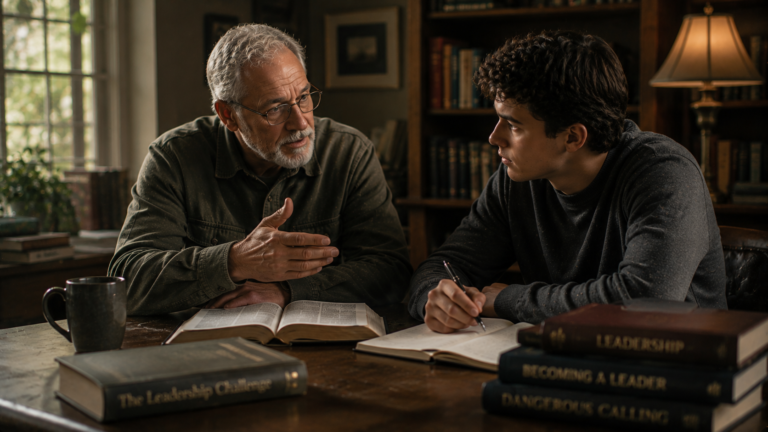
A mentor forming one person.
A leader refusing compromise.
A believer faithfully transmitting truth.
Psalm 145 says:
“One generation shall praise thy works to another, and shall declare thy mighty acts.”
— Psalm 145:4, KJV
Enduring legacy is fundamentally generational.
Something true and valuable is received.
Lived.
Protected.
Then passed on.
The strongest legacies endure not because leaders make themselves unforgettable, but because what they give others is worth carrying forward.
Enduring Legacies Are Built on Truth
Trends change.
Leadership theories change.
Technology changes.
Organizations change.
Human preferences change.
Truth does not.
Jesus said:
“Heaven and earth shall pass away, but my words shall not pass away.”
— Matthew 24:35, KJV
A legacy built primarily around personality becomes vulnerable when the personality disappears.
A legacy rooted in truth can continue because its foundation is larger than the leader.
Christian leaders should therefore ask:
Am I teaching people to depend upon me, or am I rooting them in truth that will remain when I am gone?
Enduring Legacies Are Embodied, Not Merely Spoken
People hear what leaders teach.
They watch what leaders live.
If those two things contradict each other, behavior usually becomes the stronger lesson.
A leader teaches humility but demands special treatment.
Teaches generosity but protects personal privilege.
Teaches accountability but refuses correction.
Teaches family faithfulness but neglects home.
The contradiction weakens the legacy.
Paul could say:
“Those things, which ye have both learned, and received, and heard, and seen in me, do…”
— Philippians 4:9, KJV
They had not only heard.
They had seen.
Enduring influence usually requires embodied truth.
Character Gives Legacy Credibility
Talent can create attention.
Character creates trust.
People may admire a leader’s intelligence.
Communication.
Creativity.
Courage.
Strategic ability.
But when people decide what deserves imitation, character matters deeply.
Was the leader truthful?
Faithful?
Humble?
Dependable?
Compassionate?
Did the leader behave consistently when no one was watching?
Proverbs says:
“The just man walketh in his integrity: his children are blessed after him.”
— Proverbs 20:7, KJV
Notice the generational consequence.
Integrity does not end with the individual.
Others benefit from it.
Enduring Legacies Form People
Projects can end.
People continue.
This is why leaders who invest deeply in others often extend their influence farther than leaders who concentrate entirely upon personal achievement.
Jesus formed disciples.
Paul formed Timothy.
Moses prepared Joshua.
Elijah developed Elisha.
Truth moved through relationships.
Paul told Timothy:
“And the things that thou hast heard of me… the same commit thou to faithful men, who shall be able to teach others also.”
— 2 Timothy 2:2, KJV
That is how legacy becomes multiplication.
Enduring Legacies Produce Carriers, Not Admirers
Admiration is not enough.
People may appreciate a leader without continuing anything the leader valued.
Enduring legacy requires carriers.
People who understand the convictions.
Live them.
Teach them.
Adapt them faithfully.
Pass them forward.
Jesus did not merely gather people who admired Him.
He made disciples.
The distinction matters.
Admiration can end with a generation.
Discipleship reproduces.
Enduring Legacies Give People Ownership
If everything remains centered upon one leader, the work may weaken when that leader leaves.
Others must eventually receive real responsibility.
Authority.
Decision-making.
Opportunity.
Ownership.
Jesus sent His disciples into ministry before His earthly ministry ended.
“And he sent them to preach the kingdom of God…”
— Luke 9:2, KJV
They were not merely observers.
They became participants.
Legacy strengthens when responsibility is transferred before departure becomes necessary.
Enduring Legacies Survive the Founder’s Absence
This is an important test.
What happens when the leader is not present?
Do values remain?
Do people know how to make decisions?
Does the mission continue?
Can conflict be handled?
Can new leaders emerge?
If everything requires the founder’s presence, the legacy remains fragile.
A strong leader gradually makes personal presence less necessary for healthy continuation.
Enduring Legacies Are Simple Enough to Transfer
Complexity can weaken transmission.
If people cannot clearly explain what matters, they will struggle to preserve it.
Jesus summarized enormous spiritual truth with remarkable clarity:
“Thou shalt love the Lord thy God with all thy heart…”
— Matthew 22:37, KJV
And:
“Thou shalt love thy neighbour as thyself.”
— Matthew 22:39, KJV
Depth does not require confusion.
Strong legacies often contain clear convictions people can remember and teach.
Enduring Legacies Know Their Non-Negotiables
Not everything should be preserved forever.
Methods change.
Tools change.
Structures change.
Styles change.
But some things must remain.
Truth.
Integrity.
Mission.
Character.
Faithfulness.
A leader who treats every personal preference as sacred creates rigidity.
A leader who treats everything as negotiable creates drift.
Enduring legacy requires knowing the difference.
Paul told Timothy:
“Hold fast the form of sound words, which thou hast heard of me…”
— 2 Timothy 1:13, KJV
Some things must be held fast.
Enduring Legacies Allow Methods to Change
The next generation will face circumstances the current leader never imagined.
Different technology.
Different cultural pressures.
Different opportunities.
Different challenges.
If legacy requires copying every method exactly, it may not survive.
Faithful transmission preserves principle while allowing appropriate adaptation.
Paul demonstrated flexibility in method while remaining anchored in the gospel:
“I am made all things to all men, that I might by all means save some.”
— 1 Corinthians 9:22, KJV
Mission remained.
Methods could adapt.
Enduring Legacies Are Carried Through Stories
People remember stories.
The time the leader refused an unethical opportunity.
The moment someone vulnerable was protected.
The crisis when people prayed and served together.
The mistake that was honestly admitted.
The sacrifice made because the mission mattered.
Stories make values concrete.
Israel repeatedly told the next generation what God had done.
“We will not hide them from their children, shewing to the generation to come the praises of the Lord…”
— Psalm 78:4, KJV
Stories become bridges between generations.
Enduring Legacies Create Rituals of Remembrance
Human beings forget.
Scripture repeatedly calls God’s people to remember.
Remember deliverance.
Remember covenant.
Remember God’s works.
Healthy organizations and families also need intentional memory.
Annual stories.
Celebrations.
Written histories.
Testimonies.
Traditions that explain why certain values matter.
Not nostalgia for nostalgia’s sake.
Memory for formation.
Enduring Legacies Preserve Wisdom
When experienced leaders leave without transferring what they know, organizations repeatedly relearn expensive lessons.
Why was this policy created?
Why do we avoid that practice?
What happened last time?
What principle guided this decision?
Wisdom should be documented and taught.
Moses repeatedly instructed Israel to preserve God’s commands for future generations.
“And thou shalt teach them diligently unto thy children…”
— Deuteronomy 6:7, KJV
Transmission must be intentional.
Enduring Legacies Build Systems Around Values
Values need structures.
If transparency matters, financial processes should reflect it.
If development matters, mentoring should be built into leadership.
If accountability matters, leaders should actually be accountable.
If people matter, workloads and policies should reflect human dignity.
Otherwise values remain aspirations.
Enduring legacies turn convictions into practices.
Enduring Legacies Develop Successors Early
Succession should not begin when the leader announces departure.
By then, it may be too late.
Moses prepared Joshua before his death.
Paul developed Timothy while still actively ministering.
Jesus formed His disciples throughout His ministry.
Future leadership should be cultivated while current leadership is still strong.
Enduring Legacies Develop More Than One Successor
A healthy legacy should not depend entirely upon one person.
Jesus formed twelve.
Paul worked with many coworkers.
Leadership capacity should be distributed.
Different gifts.
Different responsibilities.
Different future possibilities.
This creates resilience.
Enduring Legacies Give the Next Generation Room
Some leaders prepare successors but never truly release them.
Every new idea is corrected.
Every different method is criticized.
Every decision is compared with how the former leader would have done it.
The successor inherits responsibility without freedom.
That weakens legacy.
Ecclesiastes reminds us:
“To every thing there is a season…”
— Ecclesiastes 3:1, KJV
Leadership itself has seasons.
There is a season to carry.
And a season to release.
Enduring Legacies Do Not Require Permanent Control
Control can preserve appearance temporarily.
But legacy built on control remains dependent upon the controller.
Healthy legacy requires trust.
Future leaders must eventually make decisions the founder would not make exactly the same way.
The question becomes:
Are they faithful to the core mission and truth?
Not:
Are they reproducing my personality?
Enduring Legacies Survive Because People Understand Why
Rules without reasons become vulnerable.
The next generation eventually asks:
Why?
If no one knows, the practice may disappear.
Leaders should explain:
Why integrity matters.
Why certain boundaries exist.
Why the mission matters.
Why people are treated this way.
Why some opportunities are rejected.
Understanding strengthens transmission.
Enduring Legacies Are Tested by Crisis
Values are easiest to proclaim when they cost little.
Crisis reveals what is real.
Will integrity remain when money is scarce?
Will people still matter when performance declines?
Will truth remain when reputation is threatened?
Will faith remain when results disappear?
James writes:
“The trying of your faith worketh patience.”
— James 1:3, KJV
A legacy that survives testing becomes more credible to the next generation.
Enduring Legacies Include Honest Failure
No leader’s story is perfect.
Trying to preserve an idealized history can actually weaken future generations.
They need to know:
What failed?
What was learned?
What required repentance?
What should never be repeated?
Scripture is remarkably honest about its leaders.
Abraham.
Moses.
David.
Peter.
Their failures are not hidden.
Truthful legacy does not require pretending the past was flawless.
Honest Legacies Teach Repentance
Imagine the difference between two inherited cultures.
One says:
“Our leaders never make serious mistakes.”
The other says:
“When we are wrong, we tell the truth, repent, repair what we can, and change.”
Which culture is more sustainable?
David’s prayer remains powerful because failure became confession:
“Create in me a clean heart, O God…”
— Psalm 51:10, KJV
A legacy of repentance may protect future leaders from repeating hidden failures.
Enduring Legacies Are Built Through Repetition
One speech rarely creates culture.
Values must be repeated.
Taught.
Modeled.
Celebrated.
Practiced.
Corrected.
Repeated again.
Deuteronomy describes truth woven into ordinary life:
“And thou shalt talk of them when thou sittest in thine house, and when thou walkest by the way…”
— Deuteronomy 6:7, KJV
Formation happens through repetition.
Enduring Legacies Are Relational
Information can be stored in documents.
Wisdom often travels through relationships.
Questions.
Stories.
Observation.
Correction.
Shared experiences.
Timothy did not merely receive Paul’s writings.
He knew Paul’s life.
Paul wrote:
“But thou hast fully known my doctrine, manner of life, purpose, faith, longsuffering, charity, patience…”
— 2 Timothy 3:10, KJV
Doctrine and manner of life traveled together.
Enduring Legacies Require Sacrifice
What lasts often costs something.
Time invested in people.
Opportunities refused because of principle.
Money given.
Comfort surrendered.
Credit shared.
Years spent building foundations others may enjoy.
David prepared extensively for a temple he would never build.
He invested in a future he would not personally control.
That is legacy-minded sacrifice.
Enduring Legacies Are Not Built by Chasing Legacy
There is a paradox.
Leaders who become obsessed with legacy may begin protecting their image.
They want their name preserved.
Their methods maintained.
Their contribution recognized.
Their history celebrated.
Then legacy becomes self-centered.
Jesus taught:
“For whosoever will save his life shall lose it…”
— Matthew 16:25, KJV
Christian legacy emerges from faithfulness, not self-monumentalization.
Babel Shows the Danger of Trying to Manufacture Legacy
At Babel, people said:
“…let us make us a name…”
— Genesis 11:4, KJV
They wanted permanence.
Recognition.
A monument to collective greatness.
God disrupted the project.
The desire to make a name can become spiritually dangerous.
Christian leaders are called to something different.
Not:
Make your name great.
But:
Make Christ known.
John the Baptist Understood Enduring Influence
John’s ministry became smaller when Jesus’ ministry grew.
His disciples noticed.
John answered:
“He must increase, but I must decrease.”
— John 3:30, KJV
That sounds like the opposite of legacy-building.
Yet John’s witness still speaks centuries later.
Why?
Because he understood his role.
He pointed beyond himself.
The leader who successfully points people toward something greater does not need to remain central.
Enduring Legacies Are Generous
Generous leaders give away:
Knowledge.
Credit.
Opportunity.
Access.
Responsibility.
Encouragement.
They do not make others smaller to preserve their own importance.
Jesus said:
“Freely ye have received, freely give.”
— Matthew 10:8, KJV
What leaders freely give can continue multiplying after they leave.
Enduring Legacies Are Carried by Love
People may preserve a leader’s principles because they experienced those principles through genuine care.
Paul wrote to the Thessalonians:
“So being affectionately desirous of you, we were willing to have imparted unto you… our own souls…”
— 1 Thessalonians 2:8, KJV
Leadership was not merely information transfer.
There was affection.
Relationship.
Investment.
Love gives truth a human context.
Enduring Legacies Strengthen Families
Leadership legacy is not limited to organizations.
A parent’s faithfulness can shape generations.
A grandparent’s prayers can become family memory.
A home can transmit habits of:
Prayer.
Service.
Truthfulness.
Generosity.
Scripture.
Paul reminded Timothy of the faith of Lois and Eunice.
“…which dwelt first in thy grandmother Lois, and thy mother Eunice…”
— 2 Timothy 1:5, KJV
Their influence traveled through generations without organizational titles.
Enduring Legacies May Be Invisible for Years
A teacher may never see what a student becomes.
A mentor may die before the person they developed reaches maturity.
A parent may sow truth that bears fruit decades later.
Paul writes:
“I have planted, Apollos watered; but God gave the increase.”
— 1 Corinthians 3:6, KJV
We do not control the timing of fruit.
Faithful leaders sow anyway.
Some Legacies Grow After the Leader Is Gone
Seeds can remain hidden.
A written teaching is rediscovered.
A former student remembers a principle.
A child finally understands what a parent modeled.
An emerging leader matures.
Influence can increase after direct leadership ends.
This frees leaders from demanding immediate evidence that everything mattered.
Enduring Legacies Do Not Need the Leader’s Name Attached
A principle may continue while its original teacher is forgotten.
That is not failure.
If people remain truthful, faithful, compassionate, and rooted in Christ, does it matter whether they remember exactly who first taught them?
Paul said:
“So then neither is he that planteth any thing, neither he that watereth; but God that giveth the increase.”
— 1 Corinthians 3:7, KJV
Christian leadership does not require permanent attribution.
The Strongest Legacy Points Beyond the Leader
John pointed to Jesus.
Paul pointed to Jesus.
The apostles pointed to Jesus.
Christian leadership ultimately fails if people become devoted to the leader instead of Christ.
Paul confronted this tendency in Corinth:
“For while one saith, I am of Paul; and another, I am of Apollos…”
— 1 Corinthians 3:4, KJV
Then he redirected attention toward God.
Leaders are servants.
Christ is the center.
Jesus’ Legacy Is Unique
Every human leader eventually dies.
Jesus died too.
But He rose.
His influence does not endure merely because His followers preserved His teachings.
He lives.
His kingdom continues because the King lives.
Scripture says:
“Jesus Christ the same yesterday, and to day, and for ever.”
— Hebrews 13:8, KJV
No human legacy can compare.
Jesus Built Through Sacrifice
The cross appeared to destroy everything Jesus had built.
His disciples scattered.
His enemies celebrated.
His body was placed in a tomb.
Yet through His death came redemption.
Jesus said:
“Except a corn of wheat fall into the ground and die, it abideth alone: but if it die, it bringeth forth much fruit.”
— John 12:24, KJV
The kingdom’s deepest multiplication came through sacrifice.
Christian leaders should remember this when faithfulness appears costly.
Jesus Entrusted the Mission to Others
After His resurrection, Jesus commissioned His disciples:
“Go ye therefore, and teach all nations…”
— Matthew 28:19, KJV
The mission moved outward.
One generation would tell another.
Disciples would make disciples.
The gospel would cross cultures and centuries.
This is enduring spiritual multiplication.
God’s Word Is the Ultimate Enduring Foundation
Peter writes:
“But the word of the Lord endureth for ever.”
— 1 Peter 1:25, KJV
Human leadership is temporary.
God’s Word is not.
Therefore the safest legacy is one rooted deeply in what God has spoken.
Leaders change.
Culture changes.
Generations change.
Truth remains.
Enduring Legacy Requires Knowing When to Decrease
There comes a point when leaders must step aside.
Not disappear from meaningful life.
But release centrality.
Let others decide.
Let others receive recognition.
Let others carry responsibility.
This can be one of leadership’s hardest acts.
Yet succession reveals whether the leader built a mission or merely built a role around themselves.
Leadership Reflection
Imagine your name has been removed from everything you built.
No plaque.
No biography.
No public recognition.
Now ask:
Would the work still matter to you?
Then consider what you are transmitting.
Truth: What convictions are people learning?
Character: What are they seeing in you?
People: Who are you intentionally developing?
Culture: What behaviors are becoming normal?
Systems: What wisdom has been embedded into structures?
Memory: Which stories should the next generation know?
Succession: Who is becoming capable of carrying responsibility?
Freedom: Are future leaders allowed to lead differently while remaining faithful?
Christ: Does your influence ultimately point people toward you or toward Him?
These questions reveal whether legacy is becoming durable.
Reflection
What part of your leadership would survive if you left today?
Are your deepest values clear enough for others to explain?
Do people understand why those values matter?
Who is carrying what you have taught?
Are you developing admirers or multipliers?
Have you allowed future leaders real responsibility?
What failures should be preserved as lessons rather than hidden?
Are you confusing your preferences with timeless principles?
Would you rejoice if the next generation surpassed your accomplishments?
And would you still consider your leadership successful if Christ were remembered more clearly than you?
Conclusion
Why do some legacies endure?
Not simply because the leaders were famous.
Powerful.
Brilliant.
Charismatic.
Or successful.
Enduring legacies usually contain something deeper.
Truth worth preserving.
Character worth imitating.
People worth developing.
Values deeply embodied.
Wisdom intentionally transferred.
Stories worth remembering.
Systems strong enough to continue.
Successors prepared to lead.
Humility willing to release.
Faith strong enough to pass from one generation to another.
Paul gave Timothy a remarkably simple pattern:
“…the same commit thou to faithful men, who shall be able to teach others also.”
— 2 Timothy 2:2, KJV
Receive.
Live.
Entrust.
Multiply.
That is how influence travels beyond one lifetime.
But Christian leadership reaches still deeper.
Our highest purpose is not preserving our own legacy.
It is participating faithfully in God’s work.
John the Baptist said:
“He must increase, but I must decrease.”
— John 3:30, KJV
That is not a threat to meaningful legacy.
It is the foundation of the right kind.
Let Christ increase.
Let truth remain.
Let people grow.
Let others carry responsibility.
Let another generation go farther.
And if, eventually, your name becomes only a small part of the story, let that be enough.
Because the strongest legacy is not one that forces future generations to keep looking backward at the leader.
It is one that equips them to move faithfully forward—rooted in truth, formed in character, prepared to serve, and pointing the generation after them toward Christ.
Continue Growing
→