What Outlives a Leader?

Introduction
Every leader is temporary.
No matter how gifted.
No matter how influential.
No matter how necessary they seem.
Eventually, the office changes hands.
The organization moves forward.
Another voice leads the meeting.
Another person makes the decisions.
The leader who once seemed central becomes part of the past.
This reality can feel uncomfortable because leadership often creates an illusion of permanence.
There are responsibilities to carry.
Problems to solve.
People waiting for answers.
Plans extending years into the future.
Yet Scripture repeatedly reminds us how brief human life is.
“For what is your life? It is even a vapour, that appeareth for a little time, and then vanisheth away.”
— James 4:14, KJV
If leaders themselves do not remain, an important question follows:
What does?
What survives after the title?
What continues after the influence?
What remains after people stop remembering the leader’s name?
The answer reveals something important about leadership itself.
The greatest leadership is not merely about what happens while the leader is present.
It is about what continues faithfully when the leader is gone.
Positions Do Not Outlive Leaders Forever
Titles feel important while we hold them.
Director.
Pastor.
Teacher.
Manager.
Founder.
President.
Department head.
Team leader.
But titles belong to seasons.
Eventually someone else carries them.
Ecclesiastes says:
“One generation passeth away, and another generation cometh…”
— Ecclesiastes 1:4, KJV
Wise leaders understand this early.
They do not confuse temporary authority with permanent significance.
A title gives responsibility.
It does not guarantee legacy.
Achievements May Not Last Either
Buildings deteriorate.
Programs end.
Organizations change.
Strategies become outdated.
Technologies disappear.
Projects once considered revolutionary become historical footnotes.
Even great human accomplishments eventually fade.
Jesus warned against placing ultimate confidence in earthly treasure:
“Lay not up for yourselves treasures upon earth, where moth and rust doth corrupt…”
— Matthew 6:19, KJV
This does not make building or achievement meaningless.
It puts them in perspective.
Leaders should build.
But they should build what serves something greater than the structure itself.
Reputation Eventually Fades
For a season, a leader may be widely known.
People quote them.
Invite them.
Discuss their decisions.
Follow their work.
Then another generation arrives.
Names once recognized by everyone become unfamiliar.
Psalm 103 says:
“As for man, his days are as grass: as a flower of the field, so he flourisheth.”
— Psalm 103:15, KJV
Human recognition is temporary.
A leader who builds primarily to be remembered is building upon something fragile.
But Influence Can Continue
A leader may leave while influence remains embedded in people.
A teacher’s words shape a student.
That student becomes a teacher.
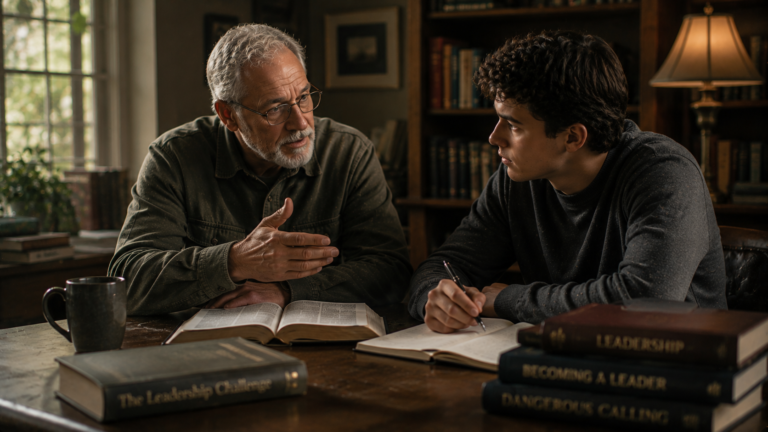
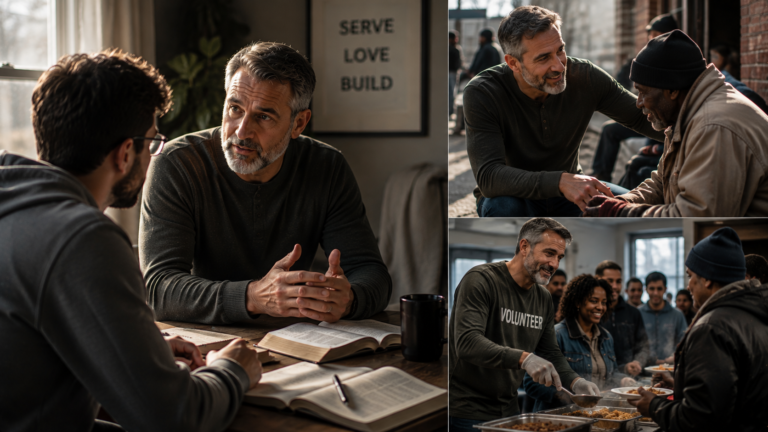
A mentor develops a young leader.
That leader develops others.
A parent teaches faith.
Children carry it into another generation.
A leader establishes a culture of integrity.
Future leaders preserve it.
Influence travels.
Paul told Timothy:
“And the things that thou hast heard of me… the same commit thou to faithful men, who shall be able to teach others also.”
— 2 Timothy 2:2, KJV
Paul would not remain.
But truth could continue moving through people.
People Outlive Positions
One of leadership’s greatest investments is people.
Not merely what they produce.
Who they become.
Jesus spent extraordinary time forming disciples.
He could have spent every available moment addressing crowds.
Instead, He walked with a relatively small group.
Taught them.
Answered questions.
Corrected them.
Sent them.
Restored them.
Prepared them.
Why?
Because the mission would continue through people.
Leadership that develops people reaches beyond the leader’s own lifetime.
Character Can Outlive a Leader
People remember how leaders lived.
Not every detail.
But patterns remain.
“She always told the truth.”
“He treated everyone with dignity.”
“She never used her position to humiliate people.”
“He admitted when he was wrong.”
“She was faithful when things were difficult.”
These memories become stories.
Stories become examples.
Examples shape future behavior.
Proverbs says:
“The memory of the just is blessed…”
— Proverbs 10:7, KJV
Character creates a kind of influence that can continue after direct authority ends.
Compromise Can Outlive a Leader Too
Legacy is not automatically positive.
A leader can leave behind unhealthy patterns.
Fear.
Secrecy.
Favoritism.
Manipulation.
Exhaustion.
Dependency.
Ethical compromise.
A new leader may inherit problems created years earlier.
Scripture says:
“A little leaven leaveneth the whole lump.”
— Galatians 5:9, KJV
What leaders normalize can survive them.
This is why everyday decisions matter.
Today’s tolerated dysfunction may become tomorrow’s inherited culture.
Culture Outlives Leaders
Culture answers questions people rarely write down.
How do we treat mistakes here?
Can we disagree with authority?
Does character matter more than performance?
Do we tell the truth when truth is costly?
Are vulnerable people protected?
Do leaders serve?
Do people receive second chances?
What happens when someone fails?
Leaders shape answers through repeated behavior.
Eventually people say:
“This is how we do things here.”
That sentence may remain long after the leader who created the pattern has left.
Values Outlive Leaders When They Become Embedded
A leader may speak constantly about values.
Integrity.
Service.
Excellence.
Compassion.
Faithfulness.
But spoken values survive only when they become practiced values.
If integrity disappears when money is at stake, integrity was never deeply embedded.
If service disappears when status increases, service was not truly cultural.
Jesus said:
“Wherefore by their fruits ye shall know them.”
— Matthew 7:20, KJV
Values become durable when people see them practiced consistently.
Stories Outlive Leaders
Every healthy community has stories.
The moment someone did the right thing at great cost.
The time a leader protected an overlooked person.
The crisis when people served sacrificially.
The mistake that was admitted publicly.
The opportunity that was rejected because it required compromise.
These stories carry culture.
Israel repeatedly preserved stories of God’s acts so future generations would remember.
Psalm 78 speaks of telling them:
“…to the generation to come the praises of the Lord, and his strength, and his wonderful works that he hath done.”
— Psalm 78:4, KJV
Stories transfer identity.
Leaders should therefore ask:
What stories will people tell about how we led?
Words Can Outlive Leaders
A sentence spoken at the right moment can remain for decades.
A teacher says:
“I believe you can do this.”
A mentor says:
“Your character matters more than your position.”
A parent says:
“Tell the truth even when it costs you.”
A leader says:
“We will not compromise people to protect numbers.”
Words become internal voices.
Proverbs says:
“A word fitly spoken is like apples of gold in pictures of silver.”
— Proverbs 25:11, KJV
Leaders should never underestimate the lasting power of carefully spoken truth.
Teaching Outlives Teachers
A faithful teacher may never know how far a lesson travels.
Truth taught today may guide a decision twenty years later.
Paul continued instructing Timothy after years of shared ministry.
He wrote:
“But continue thou in the things which thou hast learned and hast been assured of…”
— 2 Timothy 3:14, KJV
What Timothy learned was meant to continue.
Teaching becomes legacy when learners become carriers of truth.
Decisions Can Outlive Decision-Makers
Some decisions create consequences that last for generations.
Policies.
Structures.
Appointments.
Financial commitments.
Cultural precedents.
Partnerships.
A leader may make the decision in one afternoon.
Others may live with it for decades.
This is why wisdom matters.
Proverbs says:
“The simple believeth every word: but the prudent man looketh well to his going.”
— Proverbs 14:15, KJV
Wise leaders consider not merely:
What happens next?
But:
What might continue because of this?
Systems Outlive Leaders
Healthy systems can preserve wisdom.
Clear financial procedures.
Safeguarding practices.
Succession plans.
Training structures.
Decision frameworks.
Documentation.
Accountability mechanisms.
A good leader should not leave behind an organization that works only when they are personally present.
Moses learned this through Jethro’s counsel.
The leadership structure had to become larger than Moses’ personal capacity.
Systems can turn individual wisdom into organizational resilience.
But Systems Without Values Become Empty
Systems alone cannot preserve faithfulness.
A procedure can remain while its purpose is forgotten.
People may follow the rule without understanding why it exists.
Therefore leaders must transfer both:
the practice
and
the principle behind the practice.
Future leaders need to know not only:
“What do we do?”
But:
“Why does this matter?”
Habits Outlive Leaders
Repeated behaviors become habits.
Prayer before major decisions.
Review after projects.
Financial transparency.
Regular mentoring.
Honest feedback.
Rest.
Recognition of others.
These habits can continue after the original leader leaves.
Small rhythms often preserve culture more effectively than occasional speeches.
Questions Can Outlive Leaders
One of the most powerful things a leader can leave is a set of questions people continue asking.
Is this true?
Is this faithful?
Who might be harmed?
What are we overlooking?
What does Scripture say?
Are we serving the mission or protecting ourselves?
Who are we developing?
What will this decision make normal?
Leaders who teach people how to think leave something more durable than answers to today’s problems.
Standards Outlive Leaders
A leader may establish standards for:
Integrity.
Quality.
Service.
Preparation.
Accountability.
Treatment of people.
Those standards become expectations.
Paul told Timothy:
“Hold fast the form of sound words, which thou hast heard of me…”
— 2 Timothy 1:13, KJV
The next generation needed something stable to carry forward.
Courage Can Outlive Leaders
One courageous decision can make future courage easier.
Someone refuses corruption.
Someone tells the truth.
Someone protects a vulnerable person.
Someone confronts abuse.
Someone chooses principle over popularity.
Future leaders remember:
“That is what we do here.”
Courage becomes precedent.
Daniel’s faithfulness still instructs believers thousands of years later.
Faithful courage travels farther than the moment in which it occurs.
Fear Can Also Outlive Leaders
The opposite is equally true.
If leaders punish disagreement, people learn silence.
If mistakes produce humiliation, people learn concealment.
If authority is unpredictable, people learn fear.
Even after the leader leaves, those habits may remain.
People may continue acting as though the old leader were still present.
This demonstrates how deeply leadership can shape culture.
Trust Can Outlive Leaders
A leader who consistently tells the truth can strengthen confidence in an entire institution.
People learn:
Promises mean something here.
Problems will not be hidden.
Leaders can be questioned.
Mistakes will be addressed.
Trust becomes institutional rather than merely personal.
That is a powerful legacy.
Distrust Can Outlive Leaders Too
A new leader may arrive and wonder:
Why is everyone cautious?
Why does no one speak openly?
Why do people assume hidden motives?
Perhaps the new leader inherited distrust produced years earlier.
Trust builds slowly.
Damage can remain long after the person who caused it leaves.
This should make leaders careful with the trust placed in them.
The People You Promote Can Outlive You
Leadership appointments are legacy decisions.
Who receives responsibility?
What qualities are rewarded?
Charisma?
Loyalty to the leader?
Competence?
Integrity?
Humility?
Faithfulness?
The people you elevate may eventually shape the organization after you are gone.
Paul told Timothy:
“And the things that thou hast heard of me… commit thou to faithful men…”
— 2 Timothy 2:2, KJV
Faithfulness mattered.
Succession begins long before the final transition.
The Leaders You Develop Can Multiply Beyond You
Suppose you develop five leaders.
Each develops five more.
Those people influence others.
Soon your direct involvement becomes a small part of the total impact.
This is multiplication.
The leader’s name may disappear.
The fruit continues.
That is often healthier than remaining personally central.
Succession Outlives Leadership
Moses did not enter the Promised Land.
Joshua did.
Moses had to prepare another person to carry what he could not complete.
God told Moses:
“And Joshua the son of Nun was full of the spirit of wisdom; for Moses had laid his hands upon him…”
— Deuteronomy 34:9, KJV
Moses’ leadership did not end simply because Moses died.
Something had been transferred.
David Prepared for Work He Would Never Complete
David desired to build the temple.
But Solomon would build it.
David gathered materials.
Prepared plans.
Encouraged his son.
He invested in a future he would not personally lead.
This is mature leadership.
Not:
“If I cannot complete it, it does not matter.”
But:
“How can I prepare someone else to complete what matters?”
Faith Can Outlive a Leader
Paul reminded Timothy of the faith that had already traveled through his family:
“…the unfeigned faith that is in thee, which dwelt first in thy grandmother Lois, and thy mother Eunice…”
— 2 Timothy 1:5, KJV
Lois.
Eunice.
Timothy.
Faith moving through generations.
This is one of Scripture’s most beautiful pictures of influence.
A person may die.
Faithfulness can continue.
Prayer Can Outlive the Person Who Prayed
A leader may pray for people whose future they never see.
Children.
Students.
Young leaders.
Communities.
Mission work.
The answer may unfold after the leader is gone.
Scripture contains prayers whose influence continues through the written Word itself.
Faithful prayer reaches beyond what the leader can personally control.
Sacrifice Can Outlive the One Who Made It
Some people enjoy opportunities because someone before them sacrificed.
A school exists because people gave.
A ministry exists because someone persevered.
A family has greater opportunity because a previous generation worked faithfully.
The beneficiary may never fully understand the cost.
Yet the fruit remains.
Hebrews describes faithful people who died without receiving everything promised:
“These all died in faith, not having received the promises, but having seen them afar off…”
— Hebrews 11:13, KJV
Faithfulness does not require personally seeing every result.
Unfinished Work Can Still Be Faithful Work
Leaders sometimes assume success means completing everything.
But no leader completes everything.
Some plant.
Others water.
Paul wrote:
“I have planted, Apollos watered; but God gave the increase.”
— 1 Corinthians 3:6, KJV
One generation begins.
Another continues.
God gives growth.
A leader can leave unfinished work without having failed.
The question is whether the work has been faithfully prepared for those who continue it.
Humility Outlives Leaders Through the People They Empower
An insecure leader needs everyone to remember who started the work.
A humble leader is content when the work flourishes beyond them.
John the Baptist said:
“He must increase, but I must decrease.”
— John 3:30, KJV
Christian leadership contains this movement.
Christ increases.
We decrease.
The mission continues.
The leader does not need to remain at the center.
A Leader’s Family Carries a Legacy Too
Public legacy is not the only legacy.
Children remember.
Spouses remember.
Those closest to the leader know whether public character matched private character.
A leader may be celebrated publicly and leave private wounds.
Or may be little known publicly while leaving a family deeply shaped by faithfulness.
Scripture places serious importance upon household leadership:
“One that ruleth well his own house…”
— 1 Timothy 3:4, KJV
Legacy begins closer to home than many leaders realize.
What You Refuse Can Outlive You
Legacy is not only what leaders build.
Sometimes it is what they refuse.
Corruption.
Manipulation.
Dishonesty.
Exploitation.
Unethical partnerships.
Compromise.
A leader may lose an opportunity because of integrity.
Years later, people remember:
“We do not do that here.”
A faithful no can shape culture for generations.
What You Protect Can Outlive You
Leaders decide what deserves protection.
Truth.
People.
Mission.
Children.
The vulnerable.
Financial integrity.
Doctrinal faithfulness.
Healthy boundaries.
If leaders consistently protect these things, future generations inherit something strong.
If leaders primarily protect image and power, they inherit something fragile.
What You Celebrate Can Outlive You
Celebration teaches values.
What receives applause?
Growth?
Character?
Sacrifice?
Numbers?
Faithfulness?
Innovation?
Service?
Leaders shape aspiration through what they celebrate.
Jesus praised the poor widow whose offering looked insignificant by ordinary measures.
God’s evaluation can differ radically from public measurement.
What You Measure Can Outlive You
Metrics shape attention.
If leaders measure only revenue, people optimize revenue.
If they measure only attendance, attendance becomes central.
Numbers are useful.
But not everything important is easily measured.
Character.
Trust.
Faithfulness.
Spiritual growth.
Healthy relationships.
Wise leaders remember that measurement serves mission.
Mission must not become whatever is easiest to measure.
What You Write Can Outlive You
Letters.
Policies.
Books.
Notes.
Teaching materials.
Journals.
Recorded lessons.
Documentation.
Written wisdom can travel beyond a leader’s presence.
Much of what we know about Paul’s leadership comes through letters written to people in specific situations.
Those letters continue forming believers centuries later.
Leaders should consider what wisdom deserves preservation.
But Written Material Cannot Replace Living Example
Documents matter.
But people need embodiment.
A manual can say:
“We value humility.”
Then leaders behave arrogantly.
People will believe the behavior.
Jesus did not merely teach service.
He washed feet.
“For I have given you an example…”
— John 13:15, KJV
Living example gives credibility to written values.
The Gospel Outlives Every Christian Leader
This is perhaps the greatest relief.
God’s truth does not depend upon one leader surviving.
Paul died.
Peter died.
John died.
Generations of Christian leaders died.
The gospel continued.
Peter writes:
“But the word of the Lord endureth for ever.”
— 1 Peter 1:25, KJV
Leaders are temporary servants of an enduring truth.
That should produce both seriousness and freedom.
God’s Work Is Larger Than Any Leader
Elijah once felt profoundly alone.
God reminded him that thousands remained faithful.
No servant is the entire work of God.
No organization contains the whole kingdom.
No leader is indispensable to God’s purposes.
This does not diminish responsibility.
It places responsibility in perspective.
We serve faithfully.
God remains sovereign.
Jesus Built What Death Could Not Stop
Human leaders eventually die.
Jesus died and rose again.
His kingdom therefore rests on something greater than human succession.
Before His death, Jesus told His disciples:
“…I will build my church; and the gates of hell shall not prevail against it.”
— Matthew 16:18, KJV
Notice:
I will build.
The church ultimately belongs to Christ.
Christian leaders participate in work that is His before it is theirs.
Jesus Invested in What Would Continue
Jesus knew His earthly ministry was moving toward the cross.
So He prepared His disciples.
In John 17, He prayed for them.
And not only for them:
“Neither pray I for these alone, but for them also which shall believe on me through their word.”
— John 17:20, KJV
Jesus looked beyond the first generation.
To those who would believe through their witness.
That is multiplication across generations.
The Cross Created an Eternal Legacy
No human leader’s legacy compares with Christ’s.
His sacrifice did not merely inspire people.
It accomplished redemption.
Paul writes:
“For as in Adam all die, even so in Christ shall all be made alive.”
— 1 Corinthians 15:22, KJV
Christian leadership finds its deepest meaning under the cross.
We are not trying to create immortality through achievement.
Eternal life comes through Christ.
That frees leaders from needing their own names to endure.
Faithfulness Outlives Fame
Some leaders will be remembered widely.
Most will not.
That is not tragedy.
God’s kingdom has always advanced through countless faithful people whose names history never recorded.
Hebrews speaks of believers who endured extraordinary things, some unnamed.
God knew them.
Faithfulness does not require fame.
Love Outlives Many Achievements
Paul writes:
“And now abideth faith, hope, charity, these three; but the greatest of these is charity.”
— 1 Corinthians 13:13, KJV
Love remains.
People may forget the strategic plan.
But remember compassion.
Forget the presentation.
But remember patience.
Forget the exact words.
But remember that someone believed in them.
Leadership without love may achieve much and leave little worth preserving.
Truth Outlives Trends
Leadership methods change.
Cultural expectations change.
Technology changes.
Communication platforms change.
But God’s Word remains.
Jesus said:
“Heaven and earth shall pass away, but my words shall not pass away.”
— Matthew 24:35, KJV
Christian leaders should therefore distinguish timeless truth from temporary method.
Build methods flexibly.
Build upon truth firmly.
The Question Is Not Whether Something Will Outlive You
Something probably will.
The real question is:
What?
Trust?
Or suspicion?
Courage?
Or fear?
Faith?
Or cynicism?
Healthy systems?
Or dependence?
Developed leaders?
Or organizational fragility?
Integrity?
Or compromise?
People will inherit something from our leadership.
That makes intentionality essential.
Leadership Reflection
Imagine that your leadership ended today.
Not because something terrible happened.
Simply because your season was complete.
Now ask:
People: Who is ready to carry responsibility without you?
Knowledge: What important knowledge exists only in your head?
Culture: What habits would continue automatically?
Character: What would people say your example taught them?
Truth: Which convictions have been transferred deeply enough to survive your departure?
Systems: What would continue functioning?
Relationships: Who became stronger because you invested in them?
Faith: Did people become more dependent upon you—or more rooted in Christ?
Then ask:
What currently depends upon my presence that should become transferable?
That question can change how you lead now.
Reflection
What are you building that can continue without you?
Who are you preparing to carry responsibility?
What values have become visible habits rather than slogans?
What stories will people tell about your leadership?
What unhealthy pattern might continue if you do not address it now?
Have you documented important knowledge?
Do future leaders understand why your systems exist?
Are you creating dependence upon yourself?
Would you be content if the mission flourished after your name was largely forgotten?
And what are you investing in today that could still bear fruit after your leadership has ended?
Conclusion
What outlives a leader?
Not necessarily the title.
Not necessarily the organization.
Not necessarily the strategy.
Not necessarily the reputation.
Not necessarily even the leader’s name.
But people can continue.
Truth can continue.
Character can influence.
Culture can remain.
Faith can travel through generations.
Systems can preserve wisdom.
Stories can carry values.
Sacrifice can bear fruit.
Love can remain in people’s lives.
And the gospel continues far beyond every individual servant.
Paul understood this.
He knew his own ministry would end.
So he told Timothy:
“…the same commit thou to faithful men, who shall be able to teach others also.”
— 2 Timothy 2:2, KJV
Do not merely carry truth.
Entrust it.
Do not merely lead people.
Develop them.
Do not merely build systems.
Teach the principles behind them.
Do not merely occupy authority.
Prepare someone else to steward it.
Do not merely create followers.
Form people capable of serving faithfully without you.
And do not spend your life trying to make your name permanent.
John the Baptist gave Christian leadership a better ambition:
“He must increase, but I must decrease.”
— John 3:30, KJV
That is not the disappearance of meaningful influence.
It is its purification.
The leader becomes less central.
Christ becomes more central.
Others become stronger.
Truth continues.
The mission moves forward.
And one generation places something faithful into the hands of the next.
The most enduring leadership is not leadership that makes the leader impossible to forget. It is leadership that leaves people, truth, character, and faith strong enough to continue when remembering the leader is no longer necessary.
Continue Growing
→