
Following Christ When You Feel Unfinished
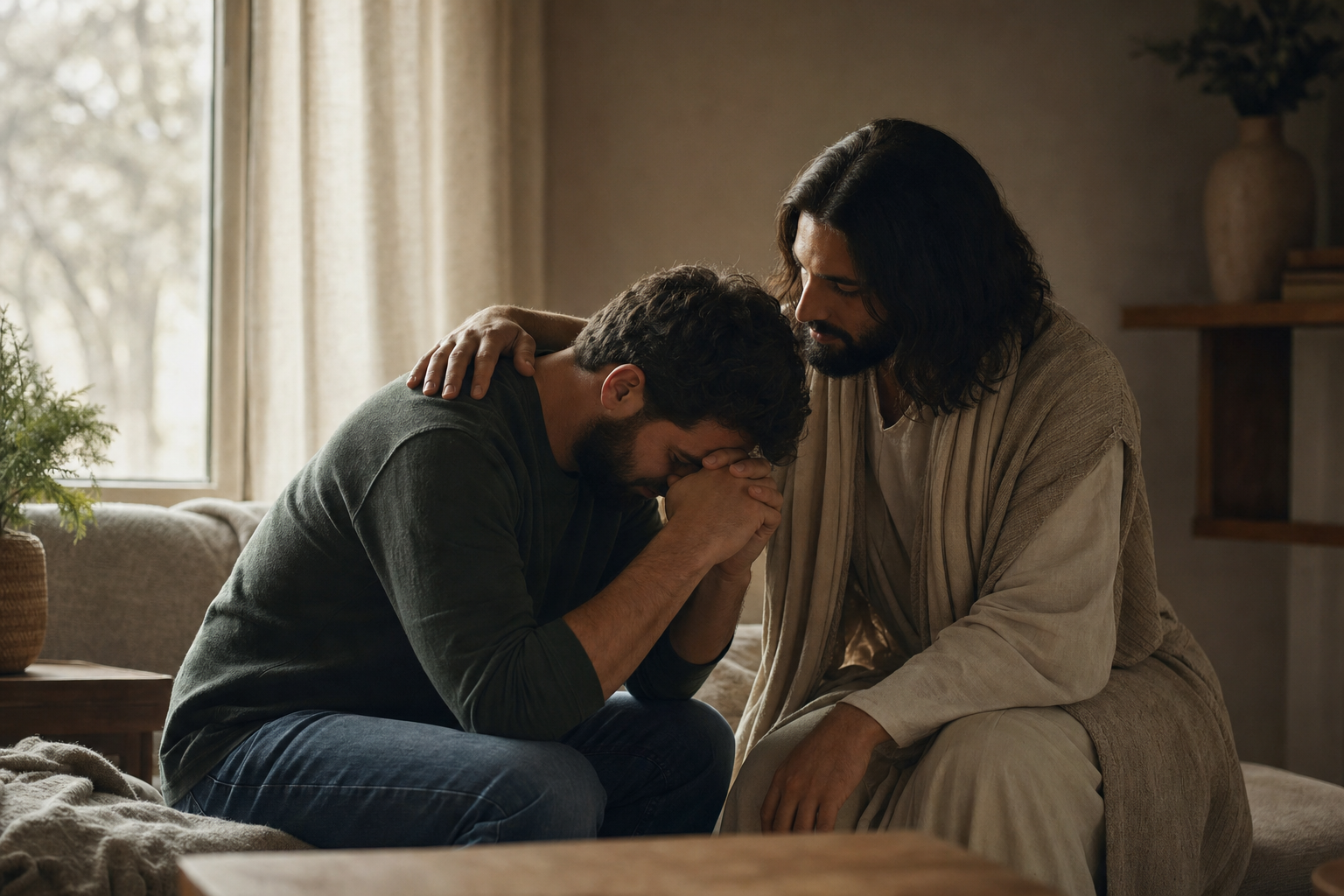
There comes a quiet ache in nearly every disciple’s life—a gap between sincere practice and the stubborn realities that remain unchanged. You can log years in church, serve faithfully, and even guide others, yet quietly sidestep certain wounds, lingering disappointments, patterns, or unspoken sins that defy all your best intentions. In these untouched, often well-protected places, discipleship easily stalls—not because you lack knowledge or zeal, but because part of your heart reflexively avoids allowing Jesus to enter where you fear being most seen. This is not laziness or apathy, but the instinct to shield unfinishedness from exposure. What if it is precisely here—not in your polished places, but where you are most unfinished—that God’s deepest work is eagerly waiting?
A Pattern of Grace: How Jesus Meets Us Where We’d Rather Hide
Consider Jesus’ parable in Luke 18:9–14. Two men enter the temple. One, a religious leader, stands tall and recites his achievements—”God, I thank you that I am not like other men…” He speaks the language of spiritual success. The other, a tax collector, stands at a distance, unable to lift his gaze, his prayer stripped of eloquence: “God, be merciful to me, a sinner.” Jesus’ verdict overturns expectations. God justifies not the one with spiritual adrenaline, but the one honest enough to hand over unfinished places without a defense. The door to grace opens not by greater performance, but by surrender of self-sufficiency: spiritual life crackles to life not where we control the narrative, but where our honest lack, named before God, finally welcomes His transforming presence.
This pattern repeats throughout Scripture and discipleship history. But often, we invert the lesson—imagining that next-level discipline, deeper self-mastery, or a certain emotional state is what invites Christ’s deepest work. Jesus, in his story, seems almost insistent: Let go of your spiritual résumé, and bring the truth of your need. It is where image collapses, not where it flourishes, that justification—and lasting growth—start.
Paul, entrusted with the stewardship of churches and visions, embodies this paradox in 2 Corinthians 12:7–10. Despite his faithfulness, he confesses to the Corinthians a persistent “thorn”—a recurring weakness or struggle he could not eliminate by effort, prayer, or resolution. Three times he pleads for relief; Christ answers, “My grace is sufficient for you, for my power is made perfect in weakness.” Seeking to protect his image would have been understandable, but Paul goes out of his way to tell others where he is not strong. His logic turns common wisdom on its head: “Therefore I will boast all the more gladly of my weaknesses, so that the power of Christ may rest upon me.” (v.9) This is not a call to broadcast struggles for their own sake, but an invitation to let Christ’s strength be most visible where our discipline, insight, or tenacity run out. Growth, Paul learns, is not achieved by continually shielding what is unfinished, but by trustful surrender—expecting that the risen Christ is willing and able to work even there.
The story of the Samaritan woman in John 4:16–26 brings this principle home in lived experience. This woman comes to the well at an unconventional hour, evading the glances and questions of neighbors who know her history. When Jesus meets her, He does not sidestep her pain or leave her shielded by a polite façade. Instead, He gently surfaces what she most wants to keep hidden—her tangled relationships, her losses, her thirst. Yet His exposure is never for public shame; it is an invitation to authentic encounter. Here, at her rawest point, Jesus reveals Himself as Messiah, and it’s this collision of her unfinishedness with His grace that prompts her transformation. Worship “in spirit and truth” is not the preserve of those with resolved stories, but those willing to meet God at the very place they most fear His gaze. She is not only forgiven—she becomes the town’s first witness because the Messiah showed up in precisely the place she’d feared to admit.
David’s prayer at the end of Psalm 139 is striking in its audacity: “Search me, O God, and know my heart! Try me and know my thoughts! See if there is any grievous way in me, and lead me in the way everlasting.” (vv.23–24) This isn’t reckless self-exposure or morbid introspection, but a faith-filled invitation: God, you see and know me fully; bring even what I have missed into the open, so that I might be led into lasting, living knowledge of You. David roots his hope not in his capacity to diagnose and repair himself, but in God’s intention to heal, guide, and shepherd him further. Vulnerability is not the threat; it is the path by which the everlasting way is discovered.
Barriers We’ve Learned to Normalize
Why do honest invitations to Christ feel riskier—sometimes even more than keeping things hidden? At some stage, most of us learn to repurpose spiritual disciplines as shields: publicly, we want to be strong; in a group, offering polished answers seems safest; in private prayer, we smooth out confessions and skip over the aching needs that embarrass us. The habits of image-keeping—especially in Christian community—can become so subtle that whole churches and small groups begin to orbit around a shared agreement to keep certain realities out of the light. Vulnerability gets confused with oversharing or emotional messiness, so we keep silent. Yet in every biblical encounter above, God’s power passes by the mask and meets the honest wound. The greatest bottleneck to real formation is rarely lack of knowledge. It is the subtle, reflexive instinct to keep Christ at arm’s length wherever we feel most unfinished, inadequate, or ashamed.
This resistance is not only individual. Communities, left unchecked, drift toward cultures of performance—where growth is measured by visible outcomes, and the messy middle is avoided. The effect? We come to believe spiritual maturity is about presenting fewer needs, fewer struggles, less visible unfinishedness as time goes on. The result is predictable: discipleship becomes an image club, not a living place of transformation. Yet the gospel invitation—again and again—is not to air everything indiscriminately or to make a virtue of brokenness, but to specifically name, before Christ and trusted believers, where we actually need resurrection.
Honest Invitation: Tangible Pathways to Formation
1. Naming and Welcoming Christ Into Your Unfinished Place
Where does your spiritual life—or ordinary life—feel most unresolved? A grief never truly acknowledged? An anger you try to keep from surfacing? A habit that resurfaces, quietly shaming you each time? A hope that seems brittle with disappointment?
Christly honesty begins by letting these places be named, in prayer, before God. Like the tax collector, start with the truth: “God, be merciful to me.” Name the specifics, not to catalogue your failures or wallow in self-defeat, but to invite Christ: “Jesus, this is the place I cannot repair on my own. I welcome You here.” Let the prayer shift from rehearsing what ought to be, to a plea for Christ’s transforming presence. The act of naming reality—without scripting a solution or pre-empting God’s answer—is the seedbed for resurrection.
2. Entrusting Your Story: Moving from Isolation to Shared Mercy
In scripture, the movement is rarely solitary for long. The New Testament calls us to “bear one another’s burdens, and so fulfill the law of Christ.” (Galatians 6:2) Find a believer whose track record is marked by grace and wisdom—a person or a group where confession is met neither by platitude nor performance. Share—not for catharsis or to offload, but for prayerful partnership. “Will you ask Jesus to meet me here, where I am unfinished?” Avoid generalities. Give Christ access by resisting vague mentions in favor of explicit need. You may find that the very act of naming and entrusting is formative—transforming community from a safety zone into an arena of grace. This isn’t forced vulnerability. It’s gospel-rooted courage, a refusal to leave the unfinished untouched by Christ’s body.
3. Trading False Scripts for Gospel Truth
Old wounds often echo with false scripts: “I’m unfixable.” “God is disappointed.” “Real believers don’t struggle like this.” The spiritual discipline here is exchange—consciously replacing shame’s script with gospel truth. Let Paul’s confession become your own mantra in weakness: “When I am weak, then I am strong.” (2 Corinthians 12:10) And Christ’s assurance: “There is now no condemnation for those who are in Christ Jesus.” (Romans 8:1) Practice replacing the self-prescribed narrative—of being deficient, abandoned, or hopeless—with what is durably true in Christ: “Jesus, Your grace calls me righteous—not my victory over this, but Your work in and for me. Even here.” These are not magic words, but the slow, persistent retelling of your story in the light of Christ’s work.
4. Making Room to Hear Christ’s Actual Response
After you name your honest place to Christ, resist the reflex to immediately fill the silence or rush into self-repair. Jesus’ interaction with the Samaritan woman was not one-sided; He revealed, and then responded. Prayer is not only declaration but listening. Ask: “Jesus, what do You want to say, show, or give to me here?” Re-read Psalm 139 with openness; linger over John 4’s encounter. Be attentive to gentle conviction, new encouragement, or even simply a deepened awareness of Christ’s presence in your struggle. The answer may not be instant relief, but a felt assurance that He is near—willing to dignify and work in what you hoped to conceal. Spiritual formation is less about immediate change than about returning, again and again, to Christ’s sustaining presence in your unfinishedness, refusing to let avoidance write the final chapter.
What If My Honesty Is Met With More Shame?
This is a sharp and realistic fear. Not every confession is met with empathy, and not every Christian context is equipped to extend Christlike grace. Sometimes, church feels more like the Pharisee-filled temple than the open arms of Christ. The New Testament never excuses misuse of trust, but it also never guarantees vulnerability will be pain-free. What Scripture does promise is this: the tax collector was justified not by crowd approval, but by God Himself (Luke 18:14). Paul’s thorn was met not with applause, but with power made perfect in weakness (2 Corinthians 12:9). Jesus met the Samaritan woman—even before her neighbors understood. Practical wisdom matters: entrust your unfinishedness to those proven safe and mature, and never allow anyone to force your story into the light for their benefit or curiosity. Still, place your hope first in Christ’s response, not in perfect human reception. The very heart of discipleship is trusting, in quiet boldness, that where avoidance yields to honest invitation, Jesus keeps His word to meet and transform—sometimes quietly, sometimes dramatically, always faithfully.
For Those Who Lead: Culture Begins With Honest Invitation
If you shepherd others—a group, a team, a family—the atmosphere of honest engagement starts with you. Lead not by displays of mastery, but by quietly naming and welcoming Christ into your own unfinished place. Model the movement: “I need Jesus’ grace here, not merely more discipline.” Begin small groups not with image-polishing, but with prayers of real need—maybe Psalm 139 or the tax collector’s plea. Give people permission to share where the process of Christ’s work is still ongoing. Culture shifts when confession becomes credible at the top. The habit of vulnerability, rooted not in self-focused disclosure but in trust that Christ delights to meet His people in their actual weakness, creates a community marked more by resurrection than by performance. A church, family, or fellowship known first for ongoing honesty becomes a true arena of formation, where Christ’s living power is consistently welcome.
The Invitation Christ Still Offers
Discipleship never starts with what you can display, but what you let Jesus enter. Right now, name one unfinished place—a wound, a habit, a relationship, a disappointment. Pause and pray: “Jesus, I give You this place. Meet me here; do what only You can do.” Resist returning to self-management. Instead, let surrender become the threshold for the real work of resurrection. The surprise of the gospel is not that you still have work to do, but that Christ willingly enters whatever remains unfinished—offering not quick fixes, but Himself.
The marks of authentic discipleship are not polish or flawless discipline, but living evidence that Jesus meets people where avoidance ends. Let Him in, again, right where you most fear to be seen. Receive the resurrection He loves to begin, over and over, wherever you invite Him to the center.