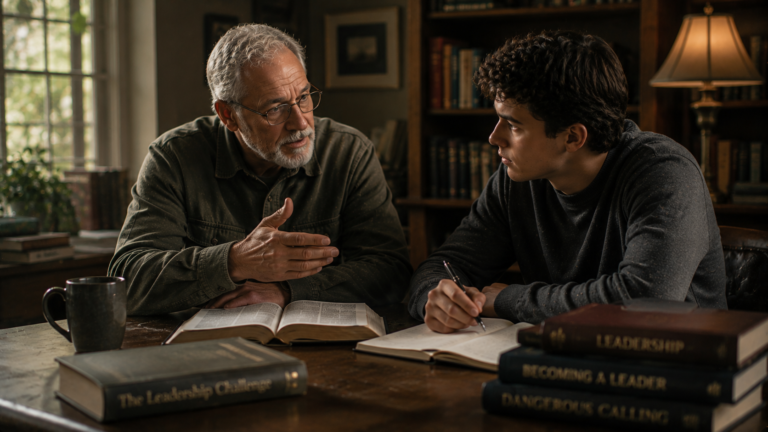
What Does It Mean to Finish Faithfully?

Introduction
Starting receives attention.
Finishing reveals character.
Many leaders begin with energy.
Vision.
Conviction.
Plans.
Opportunities.
A desire to make a difference.
But leadership is not measured only by how strongly someone begins.
The deeper question is:
How will they finish?
Will success change them?
Will disappointment harden them?
Will power corrupt them?
Will exhaustion empty them?
Will compromise slowly replace conviction?
Will they still love God when leadership becomes costly?
Will they still serve when recognition disappears?
Will they prepare others to continue when their own season ends?
Near the end of his life, Paul wrote:
“I have fought a good fight, I have finished my course, I have kept the faith.”
— 2 Timothy 4:7, KJV
Those words contain one of Scripture’s clearest pictures of faithful completion.
He had not won every argument.
Avoided every hardship.
Escaped every failure.
Received universal approval.
But he had finished his course.
And he had kept the faith.
That is a different definition of success.
To finish faithfully is not simply to reach the end.
It is to reach the end still belonging wholly to God, still holding truth, still walking in integrity, and having faithfully carried what He entrusted to you.
Finishing Faithfully Begins Long Before the Finish
No leader suddenly becomes faithful at the end.
The finish is usually built through thousands of earlier decisions.
Small choices.
Private habits.
Repeated disciplines.
Quiet acts of obedience.
Jesus said:
“He that is faithful in that which is least is faithful also in much…”
— Luke 16:10, KJV
Faithful endings are often the accumulated result of faithful ordinary days.
The leader who wants to finish well must learn to live well now.
Finishing Faithfully Is Different From Finishing Successfully
Success and faithfulness can overlap.
But they are not identical.
A ministry can grow while a leader’s character deteriorates.
An organization can become profitable while people are mistreated.
A leader can become famous while becoming spiritually empty.
Numbers can rise while integrity falls.
Jesus asked:
“For what is a man profited, if he shall gain the whole world, and lose his own soul?”
— Matthew 16:26, KJV
That question belongs in leadership.
What has really been gained if the mission grows but the leader loses what mattered most?
Faithfulness Must Define Success
The world often asks:
How large?
How fast?
How visible?
How profitable?
How influential?
Scripture repeatedly asks something deeper:
Was it faithful?
Paul wrote:
“Moreover it is required in stewards, that a man be found faithful.”
— 1 Corinthians 4:2, KJV
Leadership is stewardship.
The leader does not own the mission.
The gifts.
The people.
The opportunities.
The resources.
They are entrusted.
Faithfulness means handling them according to the purposes of the One who gave them.
Finishing Faithfully Means Keeping the Faith
Paul did not merely say:
“I finished.”
He said:
“I have kept the faith.”
— 2 Timothy 4:7, KJV
That matters.
A person can finish a career while abandoning conviction.
Finish a project while compromising truth.
Finish a leadership season while spiritually exhausted and distant from God.
Christian leadership cannot separate the mission from faithfulness to Christ.
The work must never become more important than the Lord of the work.
Finishing Faithfully Requires Guarding the Heart
Leadership exposes the heart to unusual pressures.
Praise.
Criticism.
Power.
Money.
Comparison.
Recognition.
Disappointment.
Success.
Failure.
Proverbs says:
“Keep thy heart with all diligence; for out of it are the issues of life.”
— Proverbs 4:23, KJV
Leaders often guard organizations carefully while neglecting their own hearts.
But external collapse frequently begins internally.
Success Can Threaten a Faithful Finish
Failure makes people feel vulnerable.
Success can make them feel invulnerable.
People begin listening.
Doors open.
The leader becomes respected.
Then subtle thoughts appear.
I understand more than others.
Normal rules do not quite apply to me.
The organization needs me.
My instincts are usually right.
Pride rarely announces itself dramatically.
It grows quietly.
Scripture warns:
“Pride goeth before destruction, and an haughty spirit before a fall.”
— Proverbs 16:18, KJV
Success requires stewardship just as much as difficulty does.
Failure Can Also Threaten a Faithful Finish
Some leaders do not become proud.
They become bitter.
They worked faithfully.
Results disappointed them.
People misunderstood them.
Plans failed.
Others received opportunities they wanted.
Over time, disappointment becomes resentment.
Hebrews warns:
“…lest any root of bitterness springing up trouble you…”
— Hebrews 12:15, KJV
Finishing faithfully means refusing to let disappointment redefine God’s character.
Weariness Can Threaten a Faithful Finish
Leadership can be exhausting.
Decision after decision.
Problem after problem.
People needing help.
Conflict.
Responsibility.
If weariness is ignored, leaders may become:
Irritable.
Detached.
Cynical.
Careless.
Tempted.
Spiritually dry.
Elijah experienced profound exhaustion after Mount Carmel.
God did not merely give him another assignment.
There was rest.
Food.
Presence.
Direction.
Human limits matter.
Rest Can Be Part of Faithfulness
Some leaders treat exhaustion as proof of commitment.
But Jesus Himself withdrew.
“And he withdrew himself into the wilderness, and prayed.”
— Luke 5:16, KJV
Rest is not always withdrawal from responsibility.
Sometimes it protects the ability to remain responsible.
A leader who never stops may eventually be forced to stop.
Faithfulness requires sustainable rhythms.
Finishing Faithfully Requires Remaining Teachable
Experience can create wisdom.
It can also create rigidity.
The longer someone leads, the easier it becomes to think:
I have seen this before.
I know what works.
I do not need advice.
But Proverbs says:
“A wise man will hear, and will increase learning…”
— Proverbs 1:5, KJV
Wise leaders keep learning even when they become the most experienced person in the room.
Finishing Faithfully Requires Receiving Correction
Every leader has blind spots.
The question is not whether they exist.
The question is whether anyone can speak into them.
David had Nathan.
Moses received counsel from Jethro.
Peter was confronted by Paul.
Healthy leaders need people who can say:
This is not wise.
You are missing something.
You were wrong.
You need to reconsider.
Correction can protect a leader’s future.
Isolation Makes Faithful Finishing Harder
As influence grows, honest relationships can decrease.
People become more careful around the leader.
They say what is pleasant.
Protect access.
Avoid difficult conversations.
The leader may become surrounded yet isolated.
Proverbs says:
“Where no counsel is, the people fall: but in the multitude of counsellors there is safety.”
— Proverbs 11:14, KJV
Leaders need relationships where title does not control truth.
Finishing Faithfully Requires Accountability
Good intentions are not enough.
Leaders need structures that protect integrity.
Financial accountability.
Relational boundaries.
Doctrinal accountability.
Decision-making oversight.
Trusted people who can ask difficult questions.
Paul wrote:
“Providing for honest things, not only in the sight of the Lord, but also in the sight of men.”
— 2 Corinthians 8:21, KJV
Transparency protects both leaders and those they serve.
Finishing Faithfully Requires Private Integrity
Public leadership can hide private deterioration for a while.
A person may continue:
Preaching.
Teaching.
Leading meetings.
Writing.
Managing.
Serving publicly.
While privately drifting.
But eventually the gap matters.
Psalm 101 says:
“I will walk within my house with a perfect heart.”
— Psalm 101:2, KJV
Who the leader is when the platform disappears matters deeply.
Finishing Faithfully Requires Protecting the Inner Life
Leadership can become so outward that the leader’s relationship with God becomes primarily professional.
Scripture is studied mainly for teaching.
Prayer becomes preparation for public ministry.
Spiritual language remains while private communion weakens.
Jesus said:
“Abide in me, and I in you.”
— John 15:4, KJV
Before Christian leaders produce fruit publicly, they must remain connected privately.
Finishing Faithfully Requires Remembering Who You Are Without the Role
Leadership can become identity.
“I am the pastor.”
“I am the founder.”
“I am the director.”
“I am the person everyone needs.”
Then the possibility of leaving leadership feels like losing oneself.
But Christian identity begins elsewhere.
We belong to Christ before we hold any title.
Roles change.
Sonship and discipleship remain.
Titles Must Remain Temporary
Ecclesiastes says:
“To every thing there is a season…”
— Ecclesiastes 3:1, KJV
Leadership has seasons too.
There is a time to begin.
A time to build.
A time to carry.
A time to develop others.
And eventually, often, a time to release.
Leaders who understand seasons can finish with greater freedom.
Finishing Faithfully Means Knowing When to Let Go
Some leaders damage their legacy because they cannot release leadership.
They remain too long.
Control successors.
Interfere constantly.
Resist change.
Interpret transition as rejection.
But faithful stewardship includes handing responsibility onward.
Moses did not lead Israel into the Promised Land.
Joshua did.
David did not build the temple.
Solomon did.
No leader is meant to do everything.
Finishing Faithfully Means Preparing Others
A leader who finishes with no one prepared to continue has left something incomplete.
Paul invested in Timothy.
Moses prepared Joshua.
Jesus formed disciples.
Paul told Timothy:
“…the same commit thou to faithful men, who shall be able to teach others also.”
— 2 Timothy 2:2, KJV
Faithful leadership is generational.
It asks:
Who will carry this next?
Succession Is Part of Leadership, Not What Happens After Leadership
Preparing successors should begin while leadership is healthy.
Teach people.
Give responsibility.
Share knowledge.
Explain decisions.
Document wisdom.
Let others lead.
Allow them to make appropriate mistakes.
A succession crisis often reveals a development failure that began years earlier.
Finishing Faithfully Means Wanting Others to Succeed
A leader may prepare a successor but secretly hope the organization struggles without them.
Why?
Because continued success might prove they were not indispensable.
This exposes the ego.
Healthy leaders want those who follow them to flourish.
Jesus told His disciples:
“He that believeth on me, the works that I do shall he do also; and greater works than these shall he do…”
— John 14:12, KJV
Jesus was not threatened by the future fruitfulness of His followers.
Finishing Faithfully Means Giving Away Knowledge
Some leaders maintain importance by keeping critical information centralized.
Only they know:
The relationships.
Processes.
History.
Reasoning.
Contacts.
Systems.
Then departure creates confusion.
Faithful leaders transfer what they know.
Knowledge is stewardship too.
Finishing Faithfully Means Leaving Healthy Systems
People matter most.
But systems help people continue.
Clear responsibilities.
Financial procedures.
Safeguarding.
Documentation.
Decision frameworks.
Training.
Accountability.
A healthy leader does not want the organization to require their personal intervention forever.
Finishing Faithfully Means Leaving a Healthy Culture
Culture may outlive strategy.
What became normal under your leadership?
Truth?
Service?
Prayer?
Integrity?
Humility?
Development?
Or:
Fear?
Secrecy?
Exhaustion?
Competition?
Dependence?
Control?
Leadership leaves habits behind.
Faithful leaders pay attention to what their presence is teaching people to reproduce.
Finishing Faithfully Means Repairing What You Can
No leader reaches the end without mistakes.
The question becomes:
What will you do with them?
Some relationships may need reconciliation.
Some decisions may need correction.
Some apologies may need to be given.
Some systems may need repair.
Jesus said:
“…first be reconciled to thy brother…”
— Matthew 5:24, KJV
Do not knowingly leave unnecessary damage simply because the season is ending.
Finishing Faithfully Requires Repentance
Faithful leaders are not flawless leaders.
They are leaders willing to return to truth.
David failed terribly.
But when confronted, he confessed.
Psalm 51 records:
“For I acknowledge my transgressions…”
— Psalm 51:3, KJV
A leader who cannot repent becomes increasingly dangerous.
Repentance keeps the heart soft.
Repentance Is More Important Than Image
Leaders sometimes fear that admitting failure will damage credibility.
So they protect reputation.
But hidden sin can eventually destroy far more.
Proverbs says:
“He that covereth his sins shall not prosper: but whoso confesseth and forsaketh them shall have mercy.”
— Proverbs 28:13, KJV
Finishing faithfully requires choosing truth over image.
Finishing Faithfully Means Keeping Money in Its Proper Place
Financial pressure can distort leadership.
So can financial success.
Money can become:
Security.
Status.
Control.
Measurement of worth.
Paul warned:
“For the love of money is the root of all evil…”
— 1 Timothy 6:10, KJV
Leaders need financial integrity throughout the entire journey.
Especially when trust gives them access to resources.
Finishing Faithfully Means Guarding Sexual Integrity
Many leadership collapses involve boundaries ignored gradually.
A conversation becomes too intimate.
Secrecy develops.
Emotional dependence grows.
Normal safeguards are treated as unnecessary.
The leader thinks:
I can handle this.
Scripture warns:
“Wherefore let him that thinketh he standeth take heed lest he fall.”
— 1 Corinthians 10:12, KJV
Wisdom does not merely resist temptation.
It avoids unnecessary exposure to it.
Finishing Faithfully Means Protecting Family Faithfulness
Public success cannot compensate for private neglect.
Leaders can become available to everyone except those closest to them.
Scripture treats household faithfulness seriously.
“One that ruleth well his own house…”
— 1 Timothy 3:4, KJV
A faithful finish should not leave a public legacy built upon preventable private devastation.
Finishing Faithfully Means Refusing Cynicism
Years of leadership expose people to human weakness.
Broken promises.
Conflict.
Politics.
Disappointment.
It can become easy to expect the worst.
But cynicism is not wisdom.
Wisdom sees reality clearly without surrendering hope.
Paul experienced betrayal and hardship, yet still wrote:
“Rejoice in the Lord alway…”
— Philippians 4:4, KJV
The heart must remain alive.
Finishing Faithfully Means Keeping Compassion
Long leadership can harden people.
The same problems repeat.
Another conflict.
Another person needing help.
Another disappointment.
Compassion can slowly become irritation.
Jesus, despite constant demands, repeatedly responded with compassion.
“But when he saw the multitudes, he was moved with compassion on them…”
— Matthew 9:36, KJV
Faithful leadership does not merely preserve doctrine.
It preserves love.
Finishing Faithfully Means Keeping Humility
Experience should deepen humility, not entitlement.
The longer leaders serve, the more clearly they should understand how much depended upon grace.
Paul, despite extraordinary ministry, wrote:
“But by the grace of God I am what I am…”
— 1 Corinthians 15:10, KJV
Grace destroys the illusion of self-made leadership.
Finishing Faithfully Means Remembering Who Gives the Increase
Leaders plant.
Leaders water.
But Paul says:
“…God gave the increase.”
— 1 Corinthians 3:6, KJV
This truth protects leaders from both pride and despair.
When things grow:
God gave the increase.
When faithful work produces slower results than hoped:
God remains responsible for the increase.
Our responsibility is faithfulness.
Finishing Faithfully Means Refusing to Measure Everything by Results
Results matter.
Leaders should evaluate fruit.
Learn.
Improve.
But visible results cannot become the ultimate judge of faithfulness.
Jeremiah preached through extraordinary resistance.
Noah obeyed in a generation of profound corruption.
Many faithful people in Hebrews 11 died without seeing the complete fulfillment of what they hoped for.
“These all died in faith, not having received the promises…”
— Hebrews 11:13, KJV
Faithfulness can exist even when the full harvest remains unseen.
Finishing Faithfully Means Accepting Unfinished Work
Every leader leaves something unfinished.
A project.
A vision.
A problem.
An opportunity.
A relationship.
A future possibility.
That is not automatically failure.
Paul said:
“I have planted, Apollos watered; but God gave the increase.”
— 1 Corinthians 3:6, KJV
Leadership is generational.
You do not need to finish everything.
You need to finish your part faithfully.
Finishing Faithfully Means Blessing the Next Generation
Some leaders compare.
Criticize.
Complain that younger leaders do not lead the same way.
Faithful leaders can instead bless.
Encourage.
Counsel.
Pray.
Share wisdom without demanding imitation.
Psalm 145 says:
“One generation shall praise thy works to another…”
— Psalm 145:4, KJV
Leadership should help truth travel forward.
Finishing Faithfully Means Becoming a Mentor Rather Than a Controller
As leadership seasons change, influence can change form.
Less direct authority.
More wisdom.
Less control.
More counsel.
Less visibility.
More investment.
Older leaders can become extraordinarily valuable when they release the need to remain central.
Finishing Faithfully Means Being Willing to Become Less Visible
John the Baptist said:
“He must increase, but I must decrease.”
— John 3:30, KJV
Few sentences challenge leadership ego more deeply.
Decrease.
Not because the mission matters less.
Because Christ matters more.
The leader who can become less visible without becoming bitter has understood something profound about stewardship.
Finishing Faithfully Means Releasing Credit
You may have planted something another person harvests.
You may have developed someone who becomes better known than you.
You may have built foundations future leaders expand dramatically.
Can you rejoice?
Paul said:
“So then neither is he that planteth any thing, neither he that watereth; but God that giveth the increase.”
— 1 Corinthians 3:7, KJV
The work belongs to God.
Finishing Faithfully Means Leaving People Stronger
Ask:
Are people more capable because I led them?
More truthful?
More courageous?
More compassionate?
More responsible?
More discerning?
More rooted in Scripture?
More prepared to serve?
Healthy leadership leaves strength behind.
Finishing Faithfully Means Leaving People Less Dependent on You
This sounds paradoxical.
Influential leaders are often deeply needed.
But mature leadership gradually reduces unhealthy dependency.
People learn to think.
Decide.
Lead.
Discern.
Serve.
Follow Christ.
The leader’s absence should not produce spiritual or organizational collapse.
Finishing Faithfully Means Leaving Christ at the Center
This may be the most important test.
After years of leadership, whom have people learned to depend upon?
The leader?
The organization?
The system?
Or Christ?
Paul confronted personality-centered loyalty:
“Who then is Paul, and who is Apollos, but ministers by whom ye believed…?”
— 1 Corinthians 3:5, KJV
Ministers.
Servants.
Christ remains Lord.
Jesus Is the Perfect Picture of Faithful Completion
Near the end of His earthly ministry, Jesus prayed:
“I have glorified thee on the earth: I have finished the work which thou gavest me to do.”
— John 17:4, KJV
Notice the language.
The work which thou gavest me.
Assignment.
Stewardship.
Obedience.
Jesus did not measure His mission by human applause.
He completed what the Father entrusted to Him.
Jesus Finished Through Obedience
The cross did not look like conventional success.
The crowds had changed.
His disciples scattered.
His enemies appeared victorious.
Yet Jesus remained obedient.
Philippians says:
“…he humbled himself, and became obedient unto death, even the death of the cross.”
— Philippians 2:8, KJV
Faithfulness sometimes looks very different from visible triumph.
Jesus Finished With Forgiveness
Even while being crucified, Jesus prayed:
“Father, forgive them; for they know not what they do.”
— Luke 23:34, KJV
Pain did not transform Him into bitterness.
That is an extraordinary picture of finishing faithfully.
Jesus Finished the Work
On the cross, Jesus said:
“It is finished…”
— John 19:30, KJV
Not:
I am finished.
The work was accomplished.
Redemption had reached its decisive moment.
His mission had not been derailed by rejection, suffering, or apparent defeat.
He remained faithful.
Paul Learned to Finish the Same Way
Near death, Paul did not primarily list accomplishments.
Churches planted.
Sermons preached.
Letters written.
Leaders developed.
Miracles experienced.
He summarized his life differently:
“I have fought a good fight, I have finished my course, I have kept the faith.”
— 2 Timothy 4:7, KJV
The course was finished.
The faith was kept.
That is leadership success from an eternal perspective.
Finishing Faithfully Does Not Mean Finishing Perfectly
Peter failed.
David failed.
Moses failed.
Paul had once persecuted the church.
Faithfulness does not mean an untouched record.
It means grace is allowed to transform failure.
Truth is faced.
Repentance happens.
The leader keeps returning to God.
A faithful finish is not the story of someone who never needed grace.
It is the story of someone who never stopped needing it—and never stopped returning to its Source.
The Final Audience Is God
Leadership creates many audiences.
Boards.
Teams.
Congregations.
Customers.
Employees.
Followers.
Critics.
Family.
Public opinion.
But ultimately Christian leaders answer to God.
Paul wrote:
“For we must all appear before the judgment seat of Christ…”
— 2 Corinthians 5:10, KJV
This changes leadership.
Popularity becomes less ultimate.
Criticism becomes less ultimate.
Recognition becomes less ultimate.
Faithfulness becomes central.
The Desired Final Words Are Not “Impressive”
Jesus described the commendation:
“Well done, thou good and faithful servant…”
— Matthew 25:21, KJV
Good.
Faithful.
Servant.
Three words that overturn many leadership ambitions.
Not famous servant.
Not powerful servant.
Not indispensable servant.
Faithful servant.
Leadership Reflection
Imagine you are approaching the final season of your leadership.
Not tomorrow.
Perhaps decades from now.
Look backward from that future moment.
What would you hope is still true?
That you still love God?
That your family knows your private life matched your public faith?
That you kept integrity?
That you did not sell conviction for success?
That people became stronger?
That emerging leaders were prepared?
That relationships were repaired where possible?
That money never owned your heart?
That power never became your identity?
That you remained teachable?
That Christ became greater while you became less necessary?
Now ask:
What must I practice today for that ending to become possible?
Because faithful finishes are built before the final chapter.
Reflection
Are you currently leading in a way you could sustain for decades?
What threatens your faithfulness most—success, failure, weariness, pride, isolation, or something else?
Who can correct you?
Where are you accountable?
Is your private spiritual life deeper than your public role?
Are you preparing people who can continue without you?
What knowledge still needs to be transferred?
Is there a relationship you should repair?
Are you holding something God may eventually ask you to release?
Would you rejoice if the next generation surpassed you?
If your leadership ended today, would people be more dependent upon you or more deeply rooted in Christ?
And when everything visible is stripped away, what would it mean for you to say truthfully:
“I have kept the faith”?
Conclusion
What does it mean to finish faithfully?
It means more than staying in leadership for a long time.
More than reaching retirement.
More than completing projects.
More than leaving an organization larger than you found it.
To finish faithfully is to arrive at the end still holding what mattered most.
Faith.
Truth.
Integrity.
Humility.
Love.
Obedience.
A heart surrendered to God.
It means carrying responsibility without allowing responsibility to become identity.
Receiving influence without worshiping influence.
Experiencing success without becoming proud.
Experiencing disappointment without becoming bitter.
Making mistakes without refusing repentance.
Growing older without becoming unteachable.
Developing others without becoming threatened by their growth.
And eventually releasing what was never truly yours.
Paul reached the final season of his life and said:
“I have fought a good fight, I have finished my course, I have kept the faith.”
— 2 Timothy 4:7, KJV
That is the finish worth pursuing.
So lead today with the ending in mind.
Guard your heart.
Stay close to Christ.
Tell the truth.
Remain accountable.
Protect your family.
Serve people.
Develop others.
Share responsibility.
Repair what you can.
Release what God asks you to release.
And remember that your greatest responsibility is not to make yourself indispensable.
It is to faithfully steward your season.
One day someone else may occupy your position.
Someone else may carry the work.
Someone else may receive the recognition.
Let them.
Your leadership was never meant to prove that the mission could not continue without you.
It was meant to serve God’s purposes for the time entrusted to you.
And when your part is complete, may the work continue, may others be stronger, may Christ remain at the center, and may you be able to say with Paul:
“I have fought a good fight, I have finished my course, I have kept the faith.”
Because the greatest achievement of leadership is not simply reaching the end.
It is reaching the end faithful to the One who called you, faithful to the truth He entrusted to you, and faithful in preparing others to carry that truth forward after your own season is complete.
Continue Growing
→