How Do Children Learn to Repair Relationships?

A mother sits quietly at the kitchen table, her children before her—flushed and simmering from a quarrel. They line up to mumble a required ‘sorry,’ words sliding through the silence and out the door. She has learned to count these moments as progress—until she notices what lingers: tight shoulders, downcast eyes, wounded trust. ‘Is this all?’ she wonders. Every Christian parent or child guide, honest with themselves, knows the relief of a quick apology and the ache of seeing relationships stall, fractured just beneath the surface. But what if Jesus is inviting our homes far beyond containment—into real repair, where risk and grace replace rituals and ruts?
How Children Actually Learn Repair: Developmental Pathways
Children do not absorb the art of reconciliation in an instant—nor in the same way at every age. Rather, deep repair emerges through seasons: from imitation and supported practice, to growing ownership. Understanding these developmental steps can help parents, teachers, and faith communities become wise companions rather than mere instructors.
Early Childhood (ages 3–6): Young children learn primarily by imitation and emotional safety. When adults openly confess their own mistakes and model asking forgiveness with gentle clarity, little ones begin to echo those patterns. In this stage, co-regulation is essential: an adult crouches down, gently helps the child name what happened, and—sometimes phrase by phrase—coaches the words of confession and forgiveness. The adult’s calm presence signals that facing wrong is safe. The process might sound like:
Parent (softly): “Can you tell your brother what happened with the blocks?”
Child (prompted): “I knocked down your tower, and you felt sad.”
Parent: “Would you like to say you’re sorry and ask how you can help?”
Child: “I’m sorry. Can I help build again?”
Middle Childhood (ages 7–11): Now children can understand more nuance: intention, impact, and amends. Guided practice becomes central: adults invite children not only to name what happened, but to reflect on how their actions affected another—and to help generate practical steps toward restoration. Children rehearse, with help, a fuller vocabulary: “I was angry and yelled. It hurt you. Will you forgive me? Is there something I can do to make it right?” Over time, these dialogues deepen self-awareness and empathy, moving beyond rule-following. For example:
Parent: “What happened at recess?”
Child (reflects): “I called Jenny a name because I was mad. She cried.”
Parent: “How could you repair what’s been hurt?”
Child: “I can apologize, ask how she feels, and maybe invite her to play again.”
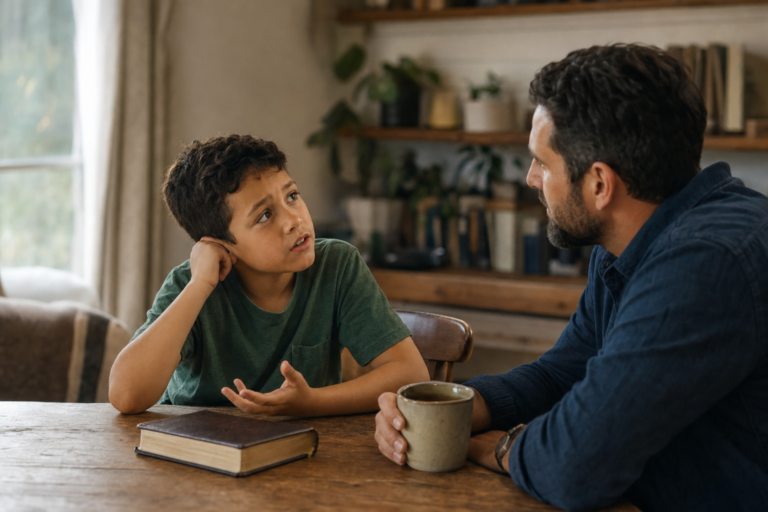
Adolescence (ages 12+): Teens crave autonomy and authenticity; they are acutely sensitive to hypocrisy and performance. Here, adults shift from direct coaching to respectful partnership, encouraging self-reflection and honest ownership. Adolescents need space to process relational breakdowns, sometimes apart from immediate apology scripts. Trusted adults can gently ask: “How do you think your actions affected your friend? What would it look like to seek repair in a way that honors both of you?” Over time—with practice, patience, and safe adults who embody humility—teens move from compliance towards internalized, Christ-shaped conviction.
Example:
Parent: “You and Marcus haven’t talked since that argument. What are you thinking about what happened?”
Teen: “I was pretty harsh. I care about our friendship but don’t know how to start.”
Parent: “Sometimes naming it honestly is the first step. Is there anything I can do to support you if you want to reach out?”
This movement—from modeling to guided support to internalized ownership—is less a straight path than a cycle. Children revisit steps at every age, and adults, too, remain learners. But when homes and ministries walk with children through these stages, Christ’s way of repair slowly takes root.
The Cost of Superficial Repair
Children learn to say ‘sorry’ early—sometimes in earnest, often by reflex. The pattern is nearly universal: a fight, an adult’s nudge, the right words spoken, and life moves on. But what moves on is not always what heals. When apologies are choreographed to escape trouble, children may learn to preserve peace on the outside while quietly internalizing a lonelier reality: wounds can be hidden, but not truly mended. Even in churches and Christian schools, this pattern endures. Sometimes, the more spiritual the language about forgiveness, the thinner reconciliation becomes in practice. ‘Sorry’ becomes a shield—not of grace, but of self-protection.
Without a richer pattern, formation stalls. Children begin to believe that real reconciliation is for later, for someone else, or for the very mature. Trust, meanwhile, erodes in slow motion—siblings avoid, friends withdraw, and families quietly ache. Yet Jesus offers children—and those shaping them—more than unspoken wounds wrapped in polite words.
The Hidden Risk and Invitation of Repair
We often imagine reconciliation as child’s play, but the real work is costly. To admit wrong, to name a wound—not just a rule broken but a relationship harmed—feels intimidating even for adults. In a child’s world, reconciliation is vulnerability: it risks renewed pain and, perhaps more frightening, being truly seen. This is why even faithful environments can harbor peace-fakers—kids who behave, but never quite trust again.
Parents and teachers sometimes sense this, yet hesitate to push for more. We wonder: Does focusing on repair do more harm than good? Won’t it just pile on guilt or teach children to perform rather than change?
But Christ does not call children to pretend or to be crushed by relational weight. Instead, He invites them (and us) into a rhythm where admitting failure, seeking forgiveness, offering restitution, and restoring trust are not punishments, but the living overflow of grace.
Christ’s Pattern: Restoration, Not Ritual
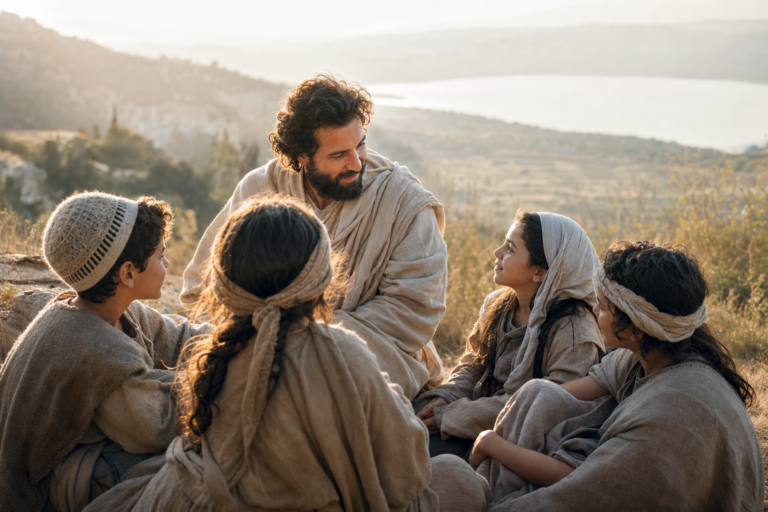
Jesus’s teaching relentlessly orients His followers toward honest, visible repair. He places the work of mending above even acts of worship: “If you are offering your gift at the altar and there remember that your brother or sister has something against you, leave your gift there before the altar. First go and be reconciled to them; then come and offer your gift” (Matthew 5:23–24). For children, this means conflict is not a distraction from spiritual life—it is where spiritual life is practiced. Restoring relationships becomes a spiritual rhythm, central to the way children learn to love and be loved in Christ’s body.
Jesus does not just give commands; He enacts restoration where others settle for words. In Luke 19, Zacchaeus—a grown man, outcast and shamed by his own choices—is drawn out by Jesus. Zacchaeus is not merely forgiven, but moved to make fourfold restitution in view of his community. While his story is his own, it illustrates the contours of Christ-shaped repair: naming wrongs, facing those affected, offering restoration, and receiving dignity, all because Jesus’s presence makes it safe to be honest. Children, too, need more than demands for admission of guilt; they need a trustworthy face—someone close, Christ-like, who makes repair not only possible but welcomed.
Paul’s call in Colossians 3:12–14 roots these habits not in performance, but in identity: “Therefore, as God’s chosen people, holy and dearly loved, clothe yourselves with compassion, kindness, humility, gentleness and patience. Bear with each other and forgive one another if any of you has a grievance against someone. Forgive as the Lord forgave you. And over all these virtues put on love, which binds them all together in perfect unity.” Repair becomes an act of putting on Christ, repeatedly. Our children are not asked to manufacture virtue, but to walk in the pattern Christ lays out: honest confession, real forgiveness, practical restitution, courageous vulnerability. As with Zacchaeus, outward acts flow from a new belonging and the safe presence of Jesus Himself.
Practicing Christ-Shaped Repair at Every Age
Transformation rarely comes from lectures or scripted apologies. Instead, it grows as children are drawn over time into communities that model, invite, and practice honest repair. Here are several concrete, gospel-shaped practices by developmental stage:
- For young children (3–6): Adults model and co-regulate. You might kneel beside your child, gently help them name what happened, and ask, “How do you think your sister feels? Let’s tell her you’re sorry and offer a hug or help cleaning up.” The process is short, supported, and sensitive to the child’s attention span and language ability.
- For older children (7–11): Transition to guided conversations. Invite the child to describe the event, own their part, and think aloud about how to repair: “You borrowed your friend’s pencil and broke it. How can you make it right?” The child might offer to replace or fix what was lost, learning that repair is practical, not just verbal.
- For preteens and teens (12+): Offer space, listening, and encouragement. Instead of formulaic apologies, invite reflection: “Is there someone you need to talk to? What do you want to say, and how can I support you?” Support teens as they initiate repair in their own words and time, demonstrating respect for their growing maturity—and reminding them that Christ-centered courage often means risking a first step toward reconciliation.
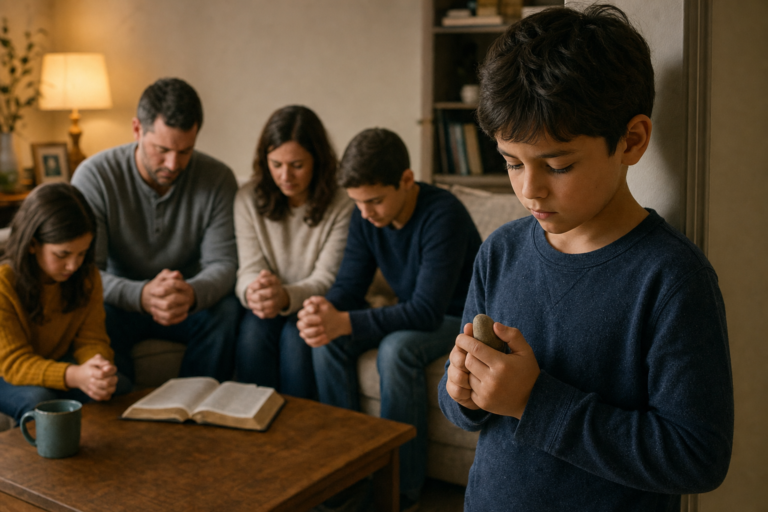
If these rhythms feel slow or awkward, that is normal. Relational repair is not a script, but a skill—and a way of being—that only the gospel can truly sustain. Over weeks and months, children often surprise adults: they begin initiating repair, naming emotions and wounds, even asking for concrete ways to make amends. This is no mere performance. It is the slow harvest of seeds planted when Jesus’s risk-taking love is made visible, not just described.
Responding to the Skeptic: Is This Just Pressure or Performance?
Some adults worry: Won’t focusing on confession and restitution make children feel guilty, or train them to fake change? The risk is real—any good thing can be twisted. Yet avoidance breeds its own harm. Children learn to hide, to preserve peace through silence, and to associate faith with managed appearances, not healing.
The path of Christ-shaped repair is fundamentally different. It does not demand flawless repentance but opens space for honest failure and the possibility of new beginnings. When a child discovers that naming a wrong will not end the relationship but deepen it, relational repair becomes not a ritual of performance, but a door into grace. When practiced as a formative rhythm in community—where adults risk the same humility required of children—gospel repair births humility, courage, and a living hope that reaches beyond childhood into every arena of Christian life.
From Surface Peace to Communities of Restoration
Over time, homes and ministries shaped by honest repair bear distinctive witness. Children who have practiced confession, received forgiveness, and offered restitution do not just smooth things over—they model for peers and even adults what the Kingdom of God looks like. Schoolyards become less warzones of rivalry, more landscapes of courageous honesty and mending. Siblings learn not simply to endure each other but to hope for each other’s healing. For many parents and leaders, it is children themselves who begin to set the tone: asking, sometimes before adults do, “How can I make this right?”
None of this is automatic. It is Christ’s presence—not perfect practices—that secures the safety needed for ongoing repair. Children form these habits not in heroic solitary moments, but within imperfect communities risked in love. The risk is always real—but the risk itself is redeemed, rooted in the One who entered our ruin and repaired what we never could.
Entrusted with Christ’s Way of Repair
No formula can secure a perfect record of reconciliation, and no practice will guarantee relationships without wounds. But Jesus entrusted to children, and to those shaping them, more than words—He entrusted His very way: honest confession, repeated forgiveness, practical steps toward restoration, and the courage to return, again and again, to each other’s hearts.
What if our families, ministries, and classrooms became places where wounds are not merely managed, but gently, bravely repaired? What if the next conflict did not spell the end of connection, but the beginning of Christ’s redemptive work in miniature? If we entrust our shared brokenness to the One who restores all things, our children may show us the way—not with perfect apologies, but with humble, hope-filled repair. This is Jesus’ invitation: not relief, but rootedness; not ritual, but real reconciliation.