When Children Question Bible Stories: Welcoming Honest Wonder
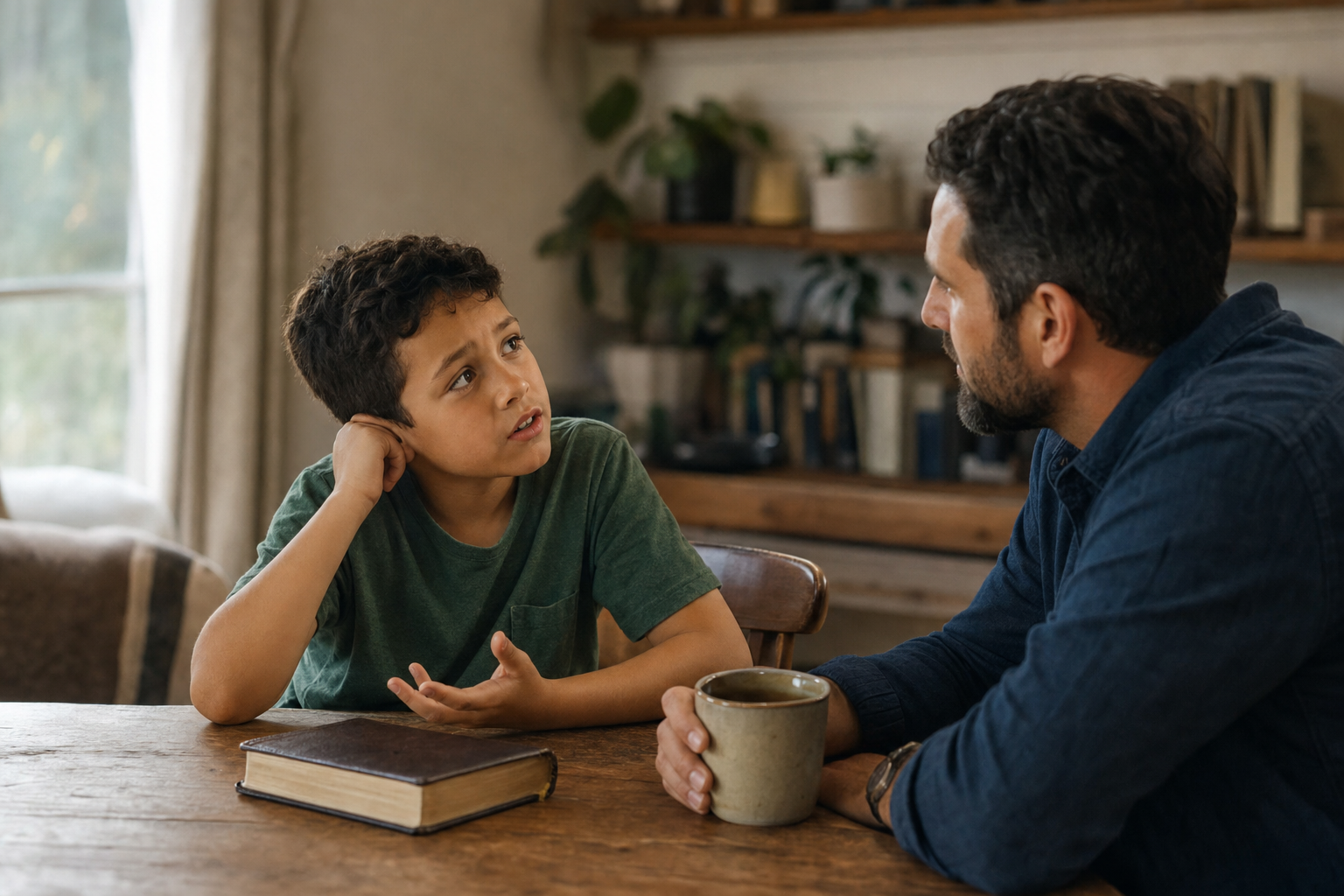
The room is half dark, still buzzing from the bedtime scramble, when a mother settles beside her daughter, who is quietly frowning at the ceiling. ‘Mom, why did God let Daniel go in the lions’ den at all? Wasn’t he scared?’ The mother’s training—Sunday School, podcasts, every good parenting book—urges her to comfort: ‘Don’t worry, God protects His people.’ But she pauses. Is a quick answer what’s needed? Or is this the moment both their hearts are called to walk deeper?
When Questions Don’t Feel Safe
Every adult guiding children through the Bible comes upon this crossroads. A child’s blunt question about a story—a strange miracle, a hard command, a dark turn—presses against our desire for simple faith. Instinct says: Patch doubt, offer answers, keep moving. Yet that urge, however well-meant, often teaches children two things: don’t bring tough questions here, and maybe some parts of the Bible are too awkward for real life.
Jesus and the Sacred Place for Questions
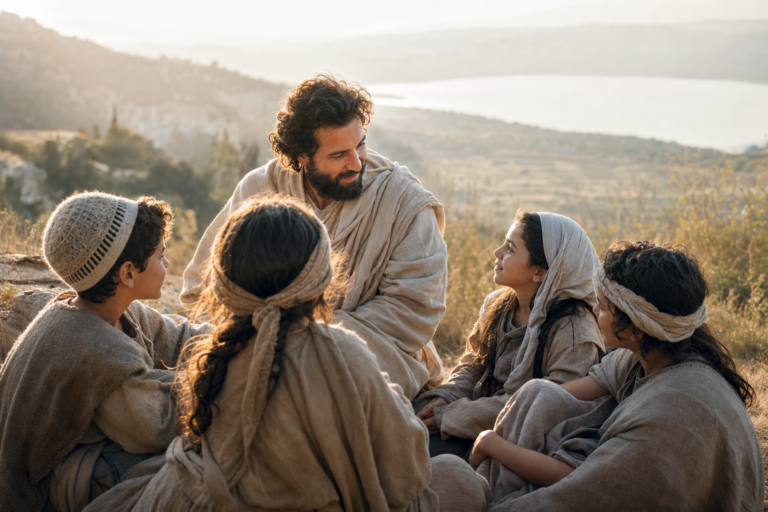
Confronted with such moments, we can take our cue from Jesus Himself. In Mark 10:13-16, when others thought children were distractions—better seen than heard—Jesus insisted on their welcome. He rebuked the adults who tried to direct or dismiss the little ones. He called children forward, blessed them, and declared their posture essential for entering God’s kingdom. Notice He does not suggest children are only ready when silent or unquestioning. Instead, He receives real, unfiltered presence. Their tendency to ask, ‘Why? Why not? How come?’ is, for Jesus, not a liability but a window into kingdom living.
Contrast this with the instinct to shield children from mysterious or troubling parts of the Bible. That inner anxiety—’Will openness tempt them to doubt?’—runs deep. But Scripture reveals a different logic: honest engagement with God’s Word is not a threat to faith. Smothering a question trains the next generation to avoid God with their real selves, while risking fragile, performative belief.
Faith as a Journey, Not a Script
The apostle Paul, writing to Timothy, names the role of childhood learning: ‘from infancy you have known the Holy Scriptures, which are able to make you wise for salvation through faith in Christ Jesus’ (2 Timothy 3:14–17). For Paul, the aim of Scripture isn’t robotically right answers—it’s the slow growth of Christ-shaped wisdom. Children’s curiosity is not a bug in the system but the engine that moves them toward enduring, saving faith in Jesus Himself.
And in Luke 24:13-35—the road to Emmaus after Christ’s resurrection—Jesus walks alongside bewildered disciples. He asks what’s on their minds. He listens to confusion and sorrow. Only then does He open the Scriptures to them, not just by giving them explanations but by helping them see Him as the story’s living center. He does not silence their struggle. He doesn’t rebuke their questions. He abides with them, and in the process, their hearts burn with new understanding and hope.
Walking With Children Toward the Living Christ
What do these passages teach us about a child’s skeptical or anxious questions? That honest inquiry—especially when it feels uncomfortable—is a door to formation, not an exit ramp from faith. The adult’s posture changes everything.
- Pause rather than patch. It’s okay not to have a perfect explanation. When a question comes, resist the urge to smooth it over. Say instead, ‘That’s a really important thought. I wonder about that, too.’
- Return to the story together. Open the Bible again. Ask, ‘What do you notice? What feels strange or surprising? Where do you see God’s heart here?’
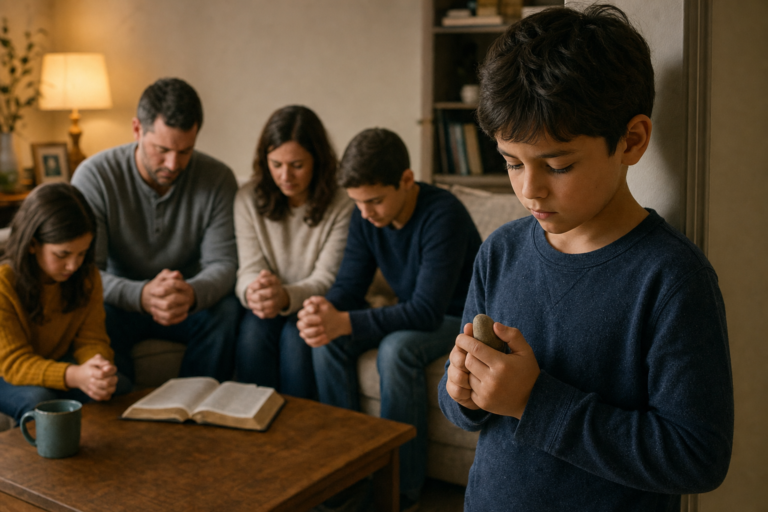
- ‘Story Circles’—a new habit. After reading, everyone (grownup included) shares at least one thing that feels confusing, odd, or exciting. No answer needed yet. Sometimes, simply making space to voice wonder or confusion is the first way Jesus meets us.
Grownup Wonders: ‘That’s so hard to understand. Let’s ask Jesus now to help us see what He wants to show us in this story, even if some things stay mysterious.’
Formation That Grows From Questions—Not in Spite of Them
Psychologists and educators recognize that children grow deeper, not weaker, in faith by facing hard questions honestly and with support. Biblical faith isn’t threatened by process. Instead, it is crafted through relationships—imitating trusted adults who live with curiosity, humility, and hope directed toward Christ.
In communities where children’s questions are welcomed, faith becomes robust, not brittle. Hidden doubts don’t accumulate into secret skepticism. Instead, kids and grownups alike learn to bring their uncertainties to the living Jesus, just like the disciples on the Emmaus road—hoping, doubting, and discovering together. This is the path to lifelong, resilient discipleship, not a detour away from it.
Sample Dialogues and Practices for Families and Churches
- Prompt curiosity: ‘What surprised you most in this story?’ ‘Is there a part that seems unfair or confusing?’
- Model honest faith: Share from your own journey: ‘I used to think this was simple, but the more I ask Jesus, the more layers I see.’
- Pray in the questions, not just the answers: ‘Jesus, help us trust You, even when we don’t understand everything. Meet us here, like You walk with Your friends on the road.’
- Reframe response: When a child worries, resist the pressure to wrap things up. Instead, say, ‘I’m glad you said that. Questions help us listen for what God is showing us now.’
What Changes When We Welcome Honest Wonder?
Over weeks, a shift often comes. The child—whose questions once felt like threats—now brings every half-formed thought with confidence that questions aren’t something to outgrow. The parent grows less anxious, less pressured to have airtight answers, more aware that faith is living relationship, not managed impression. Gradually, the Bible changes from a collection of stories to a living conversation with Christ in the center.
The Risen Jesus Meets the Wondering
It’s bedtime again. Same dim room, but now the child, after finishing a new Bible story, is the first to speak up: ‘This makes me wonder… how would Jesus be with us if we were scared, like those disciples?’ The parent, once nervous, smiles. Together they open Luke 24. The child’s question lingers; no quick answer comes. Instead, they sense—precisely here, at the edge of knowing—the space where Jesus delights to join them. Questions are no longer doorways out but the way in. Formation happens not when wonder is silenced, but when the wondering heart is welcomed by Christ Himself.