Family Worship: Sacred Ground for Children’s Questions

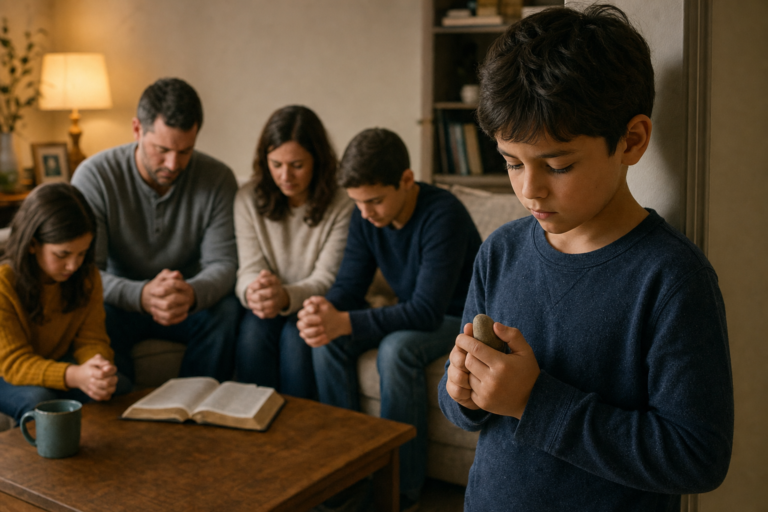
The mother didn’t expect the silence that followed. Midway through reading the Beatitudes, her youngest interrupts: “Why did my friend’s mom die if she prayed every day?” Suddenly, Scripture and routine hang in the air. Hearts race. How does faith proceed when a child’s honest question cuts to the raw edge of loss?
The Spiritual Shockwave When Children Speak Honestly
Most families lean on worship routines—sing, pray, read—hoping to cultivate faithfulness. But beneath the practiced script lies a quiet ache: children’s toughest questions are rarely voiced, much less explored. Not because parents don’t care, but because the realities children notice—death, doubt, suffering—are overwhelming. What if there’s no tidy answer? What if confusion spreads, or God seems unsteady in the process?
Children are keen observers. When their big questions meet adult discomfort, they sense which doors are quietly shut. “Worship” can slowly become a stage to perform faith, not a place to encounter a trustworthy Christ. As silence grows, children remain alone with confusion, and faith subtly shifts from engagement to management. Trust—the foundation of their relationship with God—remains thin and easily shaken.
Jesus and the Courage to Welcome Hard Questions
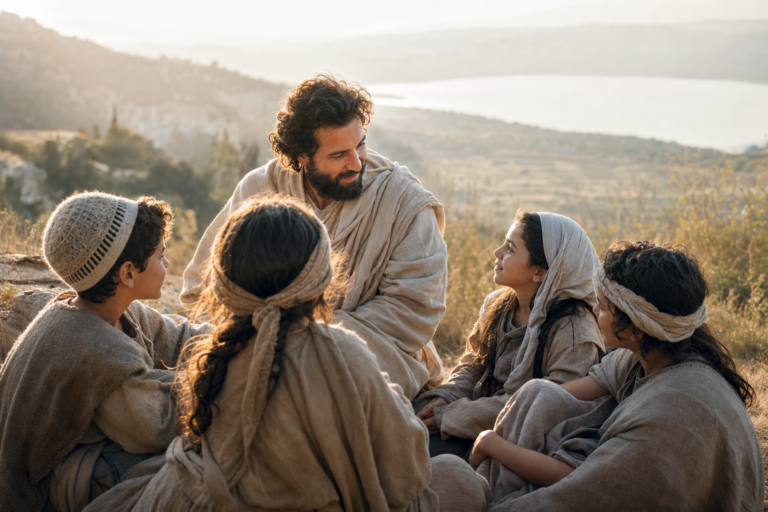
The Gospels chronicle Jesus placing a child in the very center of adult tension (Mark 9:33–37). Amid the disciples’ power struggles, Jesus draws close to a child—a cultural outsider—and embraces them without reserve. His words cut through adult caution: “Whoever receives one such child in my name receives me.” The child’s vulnerability, uncertainty, and even awkward questions don’t threaten Jesus. They become the model for encountering God’s presence.
Again (Luke 18:16–17), when adults seek order and decorum, Jesus insists that the Kingdom’s door is opened by honesty and need, not performance or perfect understanding. The Psalms capture this stance in the context of intergenerational faith. Psalm 78:1–8 calls parents to teach not just about God’s victories, but to pass down the full memory—including Israel’s failures and God’s faithfulness amid them. Children should inherit authentic stories, in which God proves trustworthy when questions and distress abound. It is a summons not simply to recite success, but to share moments of confusion and wrestling, passing on a faith robust enough for real life.
The Cost of Silence: When Avoidance Weakens Faith
When family worship becomes a place only for answers—and not for uncertainty or tension—children often learn to compartmentalize their spiritual questions. They hold back struggles, assuming God or their family can’t handle them. Over time, faith can become something outwardly practiced but inwardly detached, unable to bear the weight of genuine doubt.
Scripture shows the generational cost of avoidance. Psalm 78 laments Israel’s cycles of forgetfulness—not because they lacked rituals, but because they forgot how God met them in uncertainty and error. When families only recall victories, not valleys, confidence becomes brittle and trust in God evaporates at the first struggle. James 1:5 assures: “If any of you lacks wisdom, let him ask God, who gives generously to all without reproach, and it will be given him.” God welcomes the lack, the asking, and the inadequacy, not just resolution. The invitation to genuine inquiry is itself part of growing resilient faith.
Making Family Worship Sacred Ground: Rhythms for Honest Faith
How can families create space for honest searching—without devolving into formless skepticism or discomfort? The answer isn’t found in perfect preparation, but in practical, Christ-centered habits:
- Question Rituals: Set a bowl, jar, or digital note in your worship space. Family members can write or record real questions—big, small, confusing, even apparently irreverent. During worship, pause regularly to invite a question. Rather than dismissing or rushing to answer, dignify it: “Let’s bring this together to God, even if we don’t know yet.”
- Modeling Humility and Dependence: Parents openly admit when they don’t have the answer. Practice saying, “That’s a true and difficult question. I don’t know, but let’s seek Christ’s wisdom together.” Wisdom, not adult polish, becomes the goal. This draws directly from James 1:5 and becomes a living demonstration of faith.
- Praying Honest Prayers: Pause to pray out loud for wisdom when confronting a hard question—not for quick closure, but with the humble openness found in the Psalms: “Lord, help us with what we do not understand.” This validates the struggle and models seeking God with open hands.
- Scripture Readings That Welcome Tension: Intentionally select passages where children can see biblical heroes wrestling (laments, confused disciples, unresolved endings). Invite children to notice their own questions or feelings. In doing so, family worship itself communicates that God welcomes our full selves, questions included.
Through these patterns, children learn that worship is not a test, but a relationship anchored in Christ—one where real life and tough questions are not just allowed but cherished as part of encountering God.
Facing the Parent’s Worry: Does Welcoming Questions Undermine Faith?
Understandably, parents may fear that open inquiry leads to confusion or opens a floodgate of endless debate. Where is the line between healthy questioning and disorder?
The biblical answer is distinctive: Both Jesus and the psalmist provide invitation without surrendering purposeful direction. The aim is not chaos or the glorification of doubt, but a shared journey to Christ in which all members are permitted to be fully honest. When parents lead with humility and always return to the foundation—seeking Jesus together and praying for wisdom—family worship stays rooted, even when tension lingers. The danger is not asking, but pretending. The protection isn’t keeping questions at bay, but abiding in Christ as the safe center for the search.
Generational Impact: Multiplying Trust Through Hospitality to Questions
As homes become known as places where questions are honored, a new culture grows. Children grow confident inviting siblings or friends, knowing what matters is not a perfect answer but genuine welcome. Over time, these rhythms raise adults who do not silence or hide struggle, but who move toward Christ amid uncertainty. This way, the sacred ground of family worship expands into church, school, and friendship circles. Honest searching is not a threat to faith but a bridge to deeper trust in Christ.
A Table Left Unfinished: Returning to the Hardest Questions
Sometimes the session ends, and that original question remains unanswered. The story may be unfinished, sorrow unstilled. In that moment, the mother might say gently, “I don’t know why your friend’s mom died, even though she prayed. But we can bring our sadness and confusion to Jesus, who hears us and cares for every pain.” As the family prays together—committing their friend’s family and their own questions to God—they model not a faith that controls or explains everything, but one that abides in Christ together, especially when nothing resolves in one night. Children leave the table not with all answers, but with real confidence that Christ welcomes them—their searching, their grief, and their hope. This is the sacred ground where resilient faith takes root, just as Christ intended.