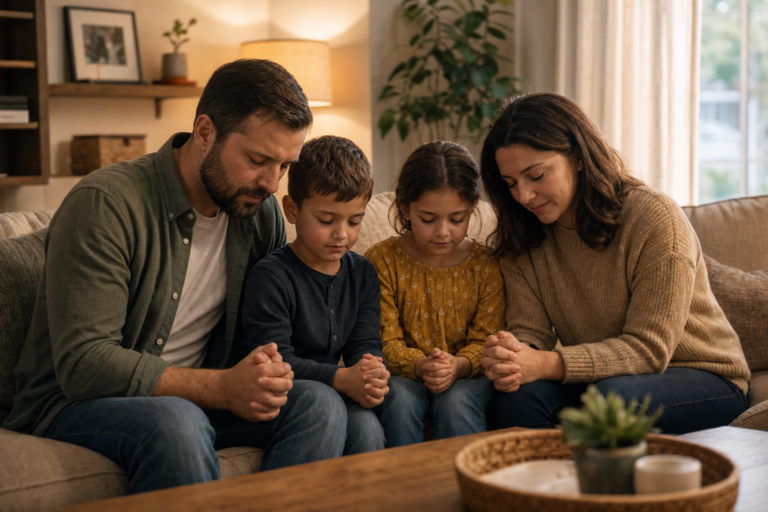
What Do Children Remember Most About Family Worship?

Ask adults what they remember about family worship as children, and most won’t recall every Bible story, hymn, or prayer. Yet, what lingers are the moments: sitting close to a parent, hearing Scripture read with warmth, praying together before bed, singing around the table, feeling safe and loved, and sensing that God was welcome in their home. These memories reveal a deeper truth—children remember experiences of love and belonging far more than information. Family worship is not just about teaching truth; it’s about creating a home where God’s love is encountered and remembered.
Love Leaves the Deepest Mark
Before children remember lessons, they remember love. They recall parents who smiled, listened, prayed with them, and welcomed their questions. When family worship is marked by kindness and patience, children begin to connect the love they receive at home with the love of God. This is not accidental—Scripture teaches that love is the foundation of all spiritual formation (Deuteronomy 6:5–7). When love is present, hearts open to God’s truth, and faith becomes personal and real.
God’s Word Planted in the Heart
The Bible is the heart of family worship. Psalm 119:11 says, “Thy word have I hid in mine heart, that I might not sin against thee.” Children may not remember every detail, but God’s Word, read and discussed in the home, quietly takes root. Years later, a verse learned in childhood may return at just the right moment. God’s Word never loses its power, and the seeds sown in family worship often bear fruit long after the moment has passed.
Prayer and Participation Shape Belonging
Children remember hearing their names spoken before God, sharing their fears and joys in prayer, and seeing prayers answered. These moments teach them that their heavenly Father listens and cares. When children are invited to participate—reading a verse, choosing a song, sharing thanks, or praying aloud—they know they belong. Family worship becomes something they experience, not just observe. These shared practices build a sense of belonging and spiritual identity that endures.
Joy, Safety, and Grace in Everyday Life
Family worship should not feel heavy or forced. Children remember joy—singing, laughing, thanking God together. A joyful home reflects the goodness of our heavenly Father and reminds children that following Jesus is a privilege. In a world that can feel uncertain, family worship helps create a sense of safety. Psalm 46:1 reminds us, “God is our refuge and strength, a very present help in trouble.” Children remember homes where they could bring every joy and worry to God. And when things aren’t perfect—when someone interrupts, forgets, or feels tired—grace matters most. Children do not need perfect parents; they need parents who keep returning to Jesus. Homes filled with grace teach that God welcomes imperfect people with perfect love.
Consistency and Everyday Conversations
What shapes children most is not the length or impressiveness of family worship, but its faithful presence. The AbideRooted Family™ framework emphasizes that small, repeated rhythms of spiritual formation shape hearts more deeply than occasional big events. Children remember that family worship happened—again and again. Faithfulness quietly builds lifelong memories. And family worship doesn’t end with “Amen.” Children remember conversations at meals, prayers in the car, talking about God’s creation on a walk, and thanking God before bed. These simple moments show that following Jesus is woven into everyday life.
What Children Remember About Home—and Christ
Years later, children often remember the atmosphere of home more than the schedule. Was home peaceful? Did people forgive one another? Was God’s Word respected? Did family members pray together? Was Jesus truly important? These experiences shape how children think about God for the rest of their lives. The greatest purpose of family worship is not helping children remember facts, but helping them remember Jesus—His kindness, forgiveness, compassion, sacrifice, and invitation to follow Him. When Christ is central, family worship becomes the beginning of a lifelong relationship with the Savior, not just a family tradition.
Faithful Seeds, Lasting Fruit
Parents may wonder if family worship is making a difference. God promises that His Word never returns empty (Isaiah 55:11). Every Bible story, prayer, song, and act of love is a seed planted in a child’s heart. God faithfully causes those seeds to grow, often bearing fruit many years later. The greatest gift family worship can leave is not simply the memory of a routine, but the lasting confidence that Jesus was loved in their home, that He loved them personally, and that they can always come to Him with faith, hope, and joy.