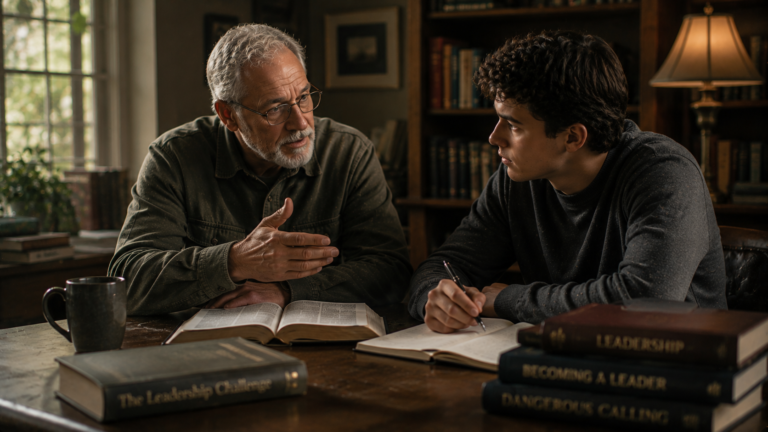
What Kind of Legacy Will Your Leadership Leave?

Introduction
Every leader eventually leaves.
The title passes to someone else.
The office belongs to another person.
The meetings continue without you.
Someone else answers the questions you once answered.
Someone else sits in the chair.
Someone else carries the responsibility.
And eventually, much of what once seemed urgent will be forgotten.
But something remains.
People remain.
Culture remains.
Habits remain.
Values remain.
Consequences remain.
The people you developed may develop others.
The trust you built may strengthen work you never see.
The wounds you caused may also continue.
The standards you established may become normal long after your name disappears from the organization.
That is legacy.
Scripture says:
“The memory of the just is blessed…”
— Proverbs 10:7, KJV
Leadership is temporary.
Its influence may not be.
So one of the most important questions a leader can ask is not:
“How successful will I become?”
It is:
“What will remain because I was here?”
Legacy Is Already Being Built
Leaders sometimes think about legacy as something considered near retirement.
But legacy is being formed now.
Today’s decisions become tomorrow’s patterns.
Today’s patterns become culture.
Today’s culture shapes people.
And those people carry something forward.
Every ordinary day contributes.
How you respond when criticized.
How you treat people who cannot advance your career.
How you use money.
How you handle confidential information.
How you react when someone else succeeds.
How you admit mistakes.
How you exercise authority.
How you behave when no one is watching.
Legacy is not primarily created in a final speech.
It is accumulated through ordinary faithfulness.
Jesus said:
“He that is faithful in that which is least is faithful also in much…”
— Luke 16:10, KJV
The small things are not separate from legacy.
They are where legacy begins.
Legacy Is More Than Achievement
Leaders naturally think in terms of accomplishment.
What did we build?
How much did we grow?
How many people did we reach?
What changed during my leadership?
These questions matter.
But achievement and legacy are not identical.
A leader can build something impressive while leaving behind:
Fear.
Dependency.
Broken relationships.
Ethical compromise.
Exhaustion.
Weak successors.
A leader can also accomplish something less visible while leaving:
Wise people.
Strong character.
Healthy systems.
Deep trust.
Faithful disciples.
Paul described his ministry in relational terms:
“For what is our hope, or joy, or crown of rejoicing? Are not even ye…?”
— 1 Thessalonians 2:19, KJV
People were part of his crown.
Christian leadership must never measure legacy only by structures.
Legacy Is What Continues Without You
A useful test of leadership is this:
What happens when you are no longer present?
Does everything collapse?
Do people know how to lead?
Can decisions be made without you?
Has wisdom been transferred?
Have others been trusted with responsibility?
Paul told Timothy:
“And the things that thou hast heard of me among many witnesses, the same commit thou to faithful men, who shall be able to teach others also.”
— 2 Timothy 2:2, KJV
Paul.
Timothy.
Faithful people.
Others also.
Four generations of transmission appear in one verse.
That is multiplication.
A strong legacy does not make future generations dependent upon the original leader.
It equips them to continue faithfully.
The People You Form May Become Your Greatest Legacy
Programs end.
Buildings deteriorate.
Technology becomes obsolete.
Strategies change.
But people continue.
The person you mentor today may influence hundreds tomorrow.
The young leader you encourage may eventually carry responsibilities greater than yours.
The student you teach may remember one truth decades later.
The employee you develop may become the kind of leader who develops others.
Jesus invested deeply in people.
He taught crowds, but He formed disciples.
Then He entrusted the mission to them.
Leadership legacy is therefore inseparable from formation.
Ask:
Who is stronger because I lead?
Not merely busier.
Not merely more dependent.
Stronger.
Wiser.
More capable.
More faithful.
Legacy Is Written in How People Were Treated
People may forget many strategic decisions.
They often remember how leadership made them feel when they were vulnerable.
When they failed.
When they were grieving.
When they disagreed.
When they needed correction.
When they had nothing to offer.
Jesus said:
“And as ye would that men should do to you, do ye also to them likewise.”
— Luke 6:31, KJV
Leadership is deeply relational.
Years later, people may not remember your presentation.
They may remember whether you listened.
Whether you humiliated them.
Whether you believed in them.
Whether you protected their dignity.
Whether you used them.
Whether you cared.
Power Leaves a Legacy
Every leader eventually teaches people what power means.
Is power used to control?
Or serve?
To silence?
Or protect?
To elevate self?
Or develop others?
Jesus gave His disciples a radically different model:
“…whosoever will be chief among you, let him be your servant.”
— Matthew 20:27, KJV
Then He explained:
“Even as the Son of man came not to be ministered unto, but to minister…”
— Matthew 20:28, KJV
The way leaders use authority becomes part of what others carry forward.
If people trained under you eventually receive authority, how will they use it?
Part of the answer may come from what they saw in you.
Character Outlives Charisma
Charisma attracts attention.
Character sustains trust.
A leader may be gifted.
Persuasive.
Intelligent.
Visionary.
Energetic.
But gifts do not answer the deepest questions.
Can this person be trusted?
Do they tell the truth?
Do they keep promises?
Do they treat people fairly?
Can they receive correction?
Do they remain faithful when recognition disappears?
Proverbs says:
“A good name is rather to be chosen than great riches…”
— Proverbs 22:1, KJV
A good name is not manufactured reputation.
It is credibility formed through character.
Legacy Is Built Through Integrity
Integrity means the public and private person increasingly agree.
The values preached are practiced.
The standards applied to others are also applied to self.
Promises matter.
Money is handled honestly.
Confidentiality is protected.
Truth is not altered for convenience.
Psalm 15 asks who may dwell with God and describes one who:
“…speaketh the truth in his heart.”
— Psalm 15:2, KJV
Integrity begins internally.
A leader cannot build a trustworthy legacy through image management.
Eventually character speaks.
Hidden Decisions Become Part of Legacy
Some of the most important leadership decisions may never be publicly known.
The money you refused because accepting it required compromise.
The confidential information you protected.
The person you defended privately.
The temptation you walked away from.
The apology no one else witnessed.
The decision to tell the truth when concealment was available.
Jesus said:
“…thy Father, which seeth in secret…”
— Matthew 6:6, KJV
Not every faithful decision becomes part of public reputation.
But every faithful decision forms the leader.
And the leader’s character eventually affects others.
Legacy Is Shaped by What You Tolerate
Leaders influence culture not only through what they promote.
They influence it through what they permit.
Disrespect tolerated becomes normal.
Dishonesty ignored becomes safer.
Gossip unchallenged spreads.
Favoritism accepted becomes expected.
Burnout celebrated becomes cultural.
Paul warned:
“A little leaven leaveneth the whole lump.”
— Galatians 5:9, KJV
Small tolerated behaviors can become large cultural patterns.
Ask:
What am I currently allowing that future leaders may inherit?
Legacy Is Shaped by What You Reward
Organizations learn quickly.
Who gets promoted?
Who gets praised?
Who receives access?
What behavior produces opportunity?
If leaders publicly speak about character but consistently reward results regardless of character, people understand the real values.
Jesus asked:
“For what is a man advantaged, if he gain the whole world, and lose himself…?”
— Luke 9:25, KJV
Results matter.
But Christian leadership cannot sacrifice the soul to achieve them.
Legacy Is Shaped by How You Handle Failure
Your own failure teaches people.
So does your response to theirs.
When you fail, do you:
Hide?
Blame?
Defend?
Or confess?
Learn?
Repair?
When others fail, do you:
Humiliate?
Discard?
Ignore?
Or combine truth, accountability, and grace?
David prayed:
“Create in me a clean heart, O God; and renew a right spirit within me.”
— Psalm 51:10, KJV
A legacy of repentance may be more spiritually powerful than a manufactured image of perfection.
Legacy Is Shaped by How You Respond to Criticism
Criticism reveals leadership quickly.
Do you punish disagreement?
Become defensive?
Withdraw?
Attack motives?
Or listen for truth?
Proverbs says:
“The ear that heareth the reproof of life abideth among the wise.”
— Proverbs 15:31, KJV
Future leaders watch what happens to people who challenge authority.
If honest disagreement is punished, silence becomes culture.
If thoughtful correction is welcomed, truth remains accessible.
Legacy Is Shaped by the Questions You Teach People to Ask
Leaders do more than provide answers.
They form judgment.
A weak leadership culture teaches:
“What does the leader want?”
A stronger culture teaches:
“What is true?”
“What is wise?”
“What serves the mission?”
“What honors God?”
“What protects people?”
“What is faithful?”
When people learn to ask good questions, leadership capacity multiplies.
Legacy Is Shaped by What Happens to Truth Around You
Can people tell you bad news?
Can they admit mistakes?
Can they disagree?
Can they raise ethical concerns?
Or does information become filtered before reaching you?
A leader may think:
“Everyone agrees with me.”
But perhaps people have simply learned that disagreement is expensive.
Proverbs says:
“Faithful are the wounds of a friend…”
— Proverbs 27:6, KJV
A wise leader leaves behind a culture where faithful wounds remain possible.
Legacy Is Shaped by Whom You Notice
Jesus repeatedly noticed people others overlooked.
Children.
The sick.
The poor.
The grieving.
The socially rejected.
Those without status.
Leadership culture reveals itself through who receives attention.
James warns against giving preferential treatment based on status.
A Christian leader should ask:
Who receives my best attention?
Only powerful people?
High performers?
Important donors?
Senior leaders?
Or do people without influence receive dignity too?
What leaders notice teaches everyone else who matters.
Legacy Is Shaped by How You Treat the Weak
Power is tested most clearly where there is little risk of retaliation.
How do you treat someone who cannot help you?
Someone junior?
Someone struggling?
Someone who made a mistake?
Someone whose work is invisible?
Jesus said:
“Inasmuch as ye have done it unto one of the least of these my brethren, ye have done it unto me.”
— Matthew 25:40, KJV
Christian leadership cannot separate treatment of people from devotion to Christ.
Legacy Is Shaped by How You Handle Money
Money reveals priorities.
Leaders make decisions about:
Compensation.
Budgets.
Expenses.
Generosity.
Transparency.
Personal benefit.
Resource allocation.
Paul described careful financial accountability:
“Providing for honest things, not only in the sight of the Lord, but also in the sight of men.”
— 2 Corinthians 8:21, KJV
Financial integrity strengthens legacy.
Financial compromise can destroy decades of trust.
Legacy Is Shaped by How You Handle Credit
Who receives recognition when something succeeds?
The leader?
The team?
The people who quietly carried the work?
Secure leaders can celebrate others.
They do not need to be central to every success.
Paul’s letters repeatedly name coworkers.
Priscilla.
Aquila.
Timothy.
Titus.
Luke.
Epaphroditus.
And many others.
He understood that ministry was shared.
A leader who gives credit teaches others that contribution matters more than ego.
Legacy Is Shaped by How You Handle Succession
One of the clearest tests of leadership is whether the leader can prepare for being replaced.
Some leaders build systems around themselves.
Every decision flows through them.
Every relationship depends upon them.
Every important responsibility remains centralized.
That may feel powerful.
It is actually fragile.
Moses eventually transferred leadership to Joshua.
God told him:
“And give him a charge in their sight.”
— Numbers 27:19, KJV
Succession was not an interruption of leadership.
It was part of leadership.
Great Leaders Prepare People to Surpass Them
Insecure leaders fear talented successors.
Secure leaders develop them.
John the Baptist said:
“He must increase, but I must decrease.”
— John 3:30, KJV
That sentence expresses something essential about Christian leadership.
Decrease is not always failure.
Sometimes decrease means the mission is succeeding beyond you.
A leader’s legacy becomes stronger when others no longer need the leader to remain central.
Legacy Requires Letting Go
There comes a point when leadership must be released.
This can be difficult.
The work feels personal.
The organization may feel like part of the leader’s identity.
But stewardship has seasons.
David desired to build the temple.
God assigned the task to Solomon.
David did not sabotage what he could not personally complete.
He prepared for it.
Gathered resources.
Encouraged Solomon.
That is legacy-minded leadership.
Legacy Is Not Controlling the Future
Leaders sometimes try to preserve legacy by controlling what happens after they leave.
But future leaders will face circumstances you never faced.
They may need different methods.
A healthy legacy gives them principles strong enough to guide adaptation.
The goal is not:
“Do everything exactly as I did.”
It is:
“Remain faithful to what truly matters.”
Legacy Is More About Principles Than Preferences
Every leader has preferences.
Communication style.
Meeting structure.
Visual style.
Work habits.
Methods.
These should not automatically become sacred.
Future leaders need to know the difference between:
Biblical conviction.
Core mission.
Wise principle.
And personal preference.
Confusing these creates unnecessary rigidity.
A strong legacy transmits convictions without forcing future generations to imitate every method.
Legacy Is Shaped by What You Teach
Words matter.
Repeated teaching forms categories.
What themes do people hear from you?
Service?
Integrity?
Faith?
Excellence?
Grace?
Mission?
Or mostly performance, growth, competition, and results?
Moses told Israel:
“And these words… shall be in thine heart: And thou shalt teach them diligently unto thy children…”
— Deuteronomy 6:6–7, KJV
Truth must be transmitted intentionally.
What leaders repeat becomes easier for communities to remember.
Legacy Is Shaped by Stories
Organizations remember stories.
The time the leader admitted being wrong.
The moment someone vulnerable was protected.
The crisis when everyone served together.
The decision to refuse compromise.
The sacrifice made for the mission.
Stories carry values.
Future generations may forget policy documents.
They often remember stories that explain:
“This is who we are.”
Leaders should live stories worth repeating.
Legacy Can Be Damaged by Success
Failure is not the only threat.
Success can be spiritually dangerous.
Growth can produce pride.
Influence can reduce accountability.
Recognition can create entitlement.
Resources can weaken dependence upon God.
Moses warned Israel about prosperity:
“Then thine heart be lifted up, and thou forget the Lord thy God…”
— Deuteronomy 8:14, KJV
Leaders should ask not only:
Can I survive failure?
But:
Can my character survive success?
Legacy Can Be Damaged by the Need to Protect Legacy
There is a paradox.
A leader becomes concerned about being remembered well.
Then begins protecting reputation.
Criticism is suppressed.
Failures are hidden.
History is rewritten.
Successors are controlled.
The attempt to protect legacy destroys it.
Christian leaders must surrender even their legacy to God.
Paul said:
“But with me it is a very small thing that I should be judged of you…”
— 1 Corinthians 4:3, KJV
Ultimately, God’s judgment matters most.
Legacy Is Not Fame
Many faithful leaders will never become widely known.
They may lead a classroom.
A small congregation.
A department.
A family.
A local ministry.
A small organization.
Their names may never appear in history books.
That does not mean their legacy is small.
Hebrews 11 describes people of faith, some named and some not.
God remembers faithfulness even when history does not.
Legacy Is Not Building a Monument to Yourself
At Babel, people said:
“…let us make us a name…”
— Genesis 11:4, KJV
That desire remains alive in leadership.
Make a name.
Build something impressive.
Become unforgettable.
Christian leadership moves in another direction.
John the Baptist said:
“He must increase, but I must decrease.”
— John 3:30, KJV
The goal is not to make our names impossible to forget.
It is to make Christ increasingly visible.
Legacy Begins With Faithfulness, Not Greatness
Jesus told the faithful servant:
“Well done, thou good and faithful servant…”
— Matthew 25:21, KJV
Not:
Well done, famous servant.
Well done, impressive servant.
Well done, influential servant.
Faithful.
Christian legacy must be measured by that word.
Legacy Includes What Happens in Your Family
Public leadership can consume private life.
A leader may influence thousands and become emotionally unavailable to the people at home.
Scripture does not treat private faithfulness as secondary.
Paul describes a leader as:
“One that ruleth well his own house…”
— 1 Timothy 3:4, KJV
Those closest to us experience the person behind the public role.
A faithful legacy should not require sacrificing them on the altar of public achievement.
Legacy Includes Spiritual Formation
Christian leaders do not merely transfer skills.
They influence what people believe about God.
About leadership.
About service.
About success.
About failure.
About grace.
About power.
A leader who speaks about Christ while leading through manipulation teaches conflicting theology.
The leadership method itself communicates something.
Jesus said:
“If I then, your Lord and Master, have washed your feet; ye also ought to wash one another’s feet.”
— John 13:14, KJV
He taught servant leadership by embodying it.
Jesus Shows Us the Greatest Leadership Legacy
Jesus held no earthly office at the end of His life.
Owned no institution.
Wrote no book.
Commanded no army.
Accumulated no wealth.
Yet His life changed history.
Why?
His legacy was not built upon self-preservation.
He gave Himself.
Jesus said:
“For even the Son of man came not to be ministered unto, but to minister, and to give his life a ransom for many.”
— Mark 10:45, KJV
The cross stands at the center of Christian leadership.
Greatness through service.
Life through sacrifice.
Victory through apparent defeat.
Christian legacy must ultimately be shaped there.
Jesus Prepared Others to Continue
Before His ascension, Jesus commissioned His disciples:
“Go ye therefore, and teach all nations…”
— Matthew 28:19, KJV
He entrusted the mission to people He had formed.
That is extraordinary leadership.
He prepared others to carry forward what He had begun.
Christian leaders should ask:
Am I merely accomplishing work, or am I forming people who can continue it?
The Greatest Legacy Is Faith Transmitted
Leadership legacy is ultimately spiritual.
Psalm 145 says:
“One generation shall praise thy works to another, and shall declare thy mighty acts.”
— Psalm 145:4, KJV
One generation.
Then another.
Faith transmitted.
Truth preserved.
Christ made known.
That legacy reaches farther than any individual career.
Leadership Reflection
Imagine that twenty years have passed.
You are no longer leading where you lead today.
Ask:
People: Who became stronger because of your leadership?
Character: What qualities did people learn by watching you?
Culture: What behaviors became normal under your influence?
Truth: Could people disagree with you honestly?
Power: Did your authority make others flourish or shrink?
Succession: Did you prepare people who could lead without you?
Faith: Did your leadership make Christ more visible—or primarily make you more visible?
Now ask one final question:
If everyone I lead eventually led others the way I lead them, what kind of culture would multiply?
Do not answer quickly.
That question reaches the heart of legacy.
Reflection
What are you building that can continue without you?
Who are you intentionally developing?
What behaviors are you currently normalizing?
What do people learn from the way you handle mistakes?
Can others tell you difficult truths?
Do you celebrate people who may eventually surpass you?
Are you building dependence upon yourself or developing maturity in others?
What would your family say leadership has produced in you?
Are you more concerned with being remembered or with being faithful?
And if your title disappeared tomorrow, what part of your influence would remain?
Conclusion
What kind of legacy will your leadership leave?
Perhaps buildings.
Programs.
Policies.
Resources.
Organizations.
But the deeper legacy will probably be carried by people.
People who learned something from the way you led.
People who became stronger—or weaker—under your authority.
People who discovered whether truth was safe.
Whether mistakes could be admitted.
Whether power could serve.
Whether integrity mattered more than appearances.
Whether faithfulness mattered more than success.
That is why legacy cannot be postponed until the end of leadership.
It is being formed today.
In meetings.
Conversations.
Budgets.
Conflicts.
Corrections.
Apologies.
Appointments.
Private decisions.
Small acts of service.
Jesus said:
“He that is faithful in that which is least is faithful also in much…”
— Luke 16:10, KJV
So do not begin by asking how to become unforgettable.
Begin by asking how to become faithful.
Develop people.
Tell the truth.
Use power to serve.
Protect the vulnerable.
Receive correction.
Repent quickly.
Prepare successors.
Hold methods loosely and convictions firmly.
Let others grow beyond you.
And above all, point beyond yourself to Christ.
Because Christian leadership does not reach its highest purpose when people continue talking about the leader.
It reaches its highest purpose when, after the leader has gone, people continue walking faithfully with God, serving others, forming the next generation, and carrying forward truth that was never meant to end with one person.
Continue Growing
→